
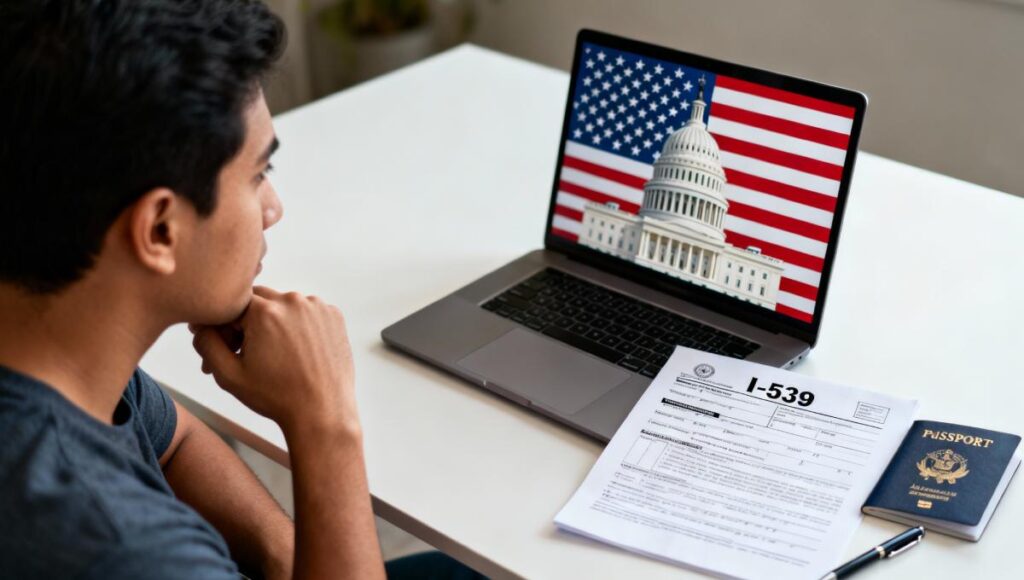
A B-2 Change of Status (COS) allows an individual who entered the United States in B-2 visitor status (e.g., tourism, family visit, medical treatment) to request permission from U.S. Citizenship and Immigration Services (USCIS) to extend their stay or change to another non-immigrant status1. This could include classifications such as F-1 (student) or H-4 (dependent)2.
This process requires strict compliance with immigration regulations to avoid unlawful presence, future visa complications, or denial of benefits3.
1. Eligibility for B-2 Change of Status
To qualify for a B-2 Change of Status, the applicant must meet several criteria4:
- Lawful Entry and Status Maintenance:
- Entered the U.S. lawfully, with a valid visa entry and inspection by CBP5.
- Maintain lawful B-2 status at the time of filing6.
- The COS application must be received by USCIS before the I-94 expiration date7.
- No Violation of Status: The applicant must not have violated the terms of their B-2 status8. This includes:
- Not working without authorization9.
- Not overstaying10.
- No criminal issues or immigration violations11.
- Requirements for New Status: The applicant must meet all the requirements for the new status being sought12. For example, F-1 applicants need proof of acceptance and sufficient financial ability, while H-4 applicants’ spouse/parent must have valid H-1B status13.
- No Preconceived Intent: Applicants must be able to show they did not enter the U.S. with the intention of changing status immediately after arrival14.
2. Required Forms and Documentation
A complete B-2 Change of Status application requires mandatory forms and robust supporting evidence15151515.
A. Mandatory Forms
- Form I-539 – Application to Extend/Change Non-immigrant Status16.
- Form I-539A – For dependents, if applicable17.
B. Supporting Evidence
- Passport and Immigration Documents: Copies of the passport biographic page, valid U.S. visa page, and the most recent I-94 record (Arrival/Departure record)18.
- Proof of Current B-2 Status: Explanation of activities in the U.S. and evidence of compliance with B-2 terms (e.g., tourism itineraries, hotel receipts)19.
- Reason for Requesting COS: A detailed written statement of purpose explaining why the change is being requested, why the request was not made earlier, how the change aligns with a temporary stay, and the intent to depart the U.S. once the new status ends20.
- Financial Evidence: Proof of self-support without unauthorized employment, such as bank statements, sponsor affidavits, or proof of funds abroad21.
- Eligibility Documents for New Status: This is classification-dependent22.
- F-1: I-20 issued by the school, evidence of SEVIS fee payment23.
- H-4: Copy of spouse/parent’s H-1B approval notice24.
3. Timeline and Processing Duration
Processing timelines for a B-2 COS vary significantly based on workload and the specific status sought25.
| Status Being Sought | Typical Timeframes |
| Change to F-1 student | 8–15 months 26 |
| Change to H-4 | 3–8 months 27 |
| Change to other statuses | 4–12 months 28 |
Important Notes on Pending Status
- You must remain in the U.S. while the COS is pending29.
- Departing the U.S. automatically abandons the application30.
- You cannot begin activities associated with the new status (e.g., employment, schooling) until USCIS officially approves the COS31.
4. Maintaining Lawful Presence During Processing
While the B-2 Change of Status is pending, you remain in lawful status, provided the application was filed before the I-94 expiry, you have not violated your prior status, and you comply with the terms of B-2 while waiting32.
- Request for Evidence (RFE): USCIS may issue an RFE, typically requesting updated financial documents, an updated explanation for continued stay, or proof of ties abroad33.
- Denial: If the COS is denied, you must exit the U.S. immediately to avoid accruing unlawful presence34.
Common Reasons for Denial
Denials often stem from procedural errors or insufficient evidence35:
- Filing after I-94 expiration36.
- Preconceived immigrant intent or misrepresentation37.
- Insufficient financial support or justification for the change in status38.
- Unauthorized employment39.
- Insufficient evidence of ties to the home country40.A denial can impact future visas or travel41.
5. Travel Restrictions During COS
Applicants should not travel outside the United States while the B-2 COS is pending42. If they depart, USCIS deems the application abandoned, and the applicant must then apply for the appropriate visa from a U.S. consulate abroad43.
Immigration Fleet Recommendation for Successful Filing
Based on experience assisting clients with Change of Status filings, the following recommendations can significantly improve your submission44444444:
- File Early: Submit the application at least 45–60 days before the I-94 expiration. This provides a buffer for delays and prevents unlawful presence45.
- Draft a Strong Explanation: Submit a clear, consistent, and well-supported explanation of your purpose. USCIS heavily scrutinizes B-2 COS filings for “preconceived intent,” so a professionally drafted letter reduces risk46.
- Substantial Financial Documentation: Over-documentation of financial ability is safer than under-documentation47.
- Seek Legal Assistance: Work with an attorney if applying for complex classifications like F-1 or H-4, as multiple agencies and careful timeline management may be involved48.
- Maintain Records: Keep a copy of all submissions and USCIS receipts to track lawful presence and respond quickly to RFEs49.
Conclusion
A B-2 Change of Status can be an effective solution for individuals wishing to remain in the United States for a temporary and legitimate purpose, provided they meet all eligibility requirements and strictly comply with USCIS rules50. Because the process involves strict timing, extensive documentation, and significant legal scrutiny, preparing a thorough, compliant, and well-structured application is essential to avoid delays or denials51.



 Immigration Fleet Law Firm