
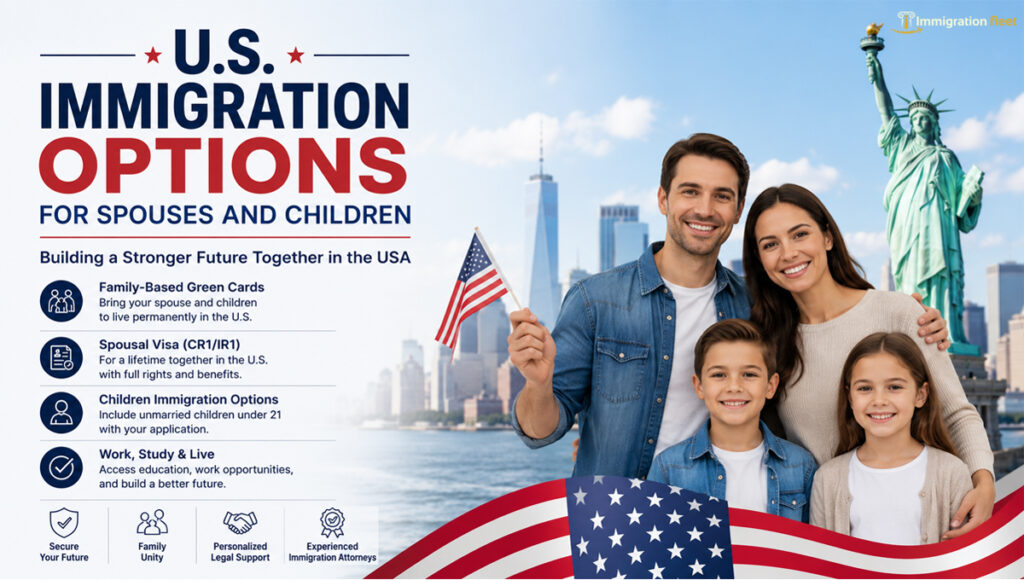
Family reunification is one of the most important parts of the U.S. immigration system. U.S. citizens and lawful permanent residents can sponsor eligible spouses and children to live legally in the United States. Understanding the available immigration options helps families avoid delays and choose the right pathway for long-term stability. U.S. family immigration lawyer
Immigration Options for Spouses
A U.S. citizen can sponsor a spouse for permanent residency through marriage-based immigration. The most common visa categories include the CR1 and IR1 immigrant visas. The CR1 visa is issued when the marriage is less than two years old, while the IR1 visa is for marriages lasting more than two years.
Another option is the K1 fiancé visa, which allows a foreign fiancé to enter the United States and marry within 90 days. After marriage, the spouse can apply for adjustment of status to receive a green card.
Lawful permanent residents can also sponsor spouses, although waiting periods may apply depending on visa availability. Proper documentation, proof of a genuine relationship, and financial sponsorship are essential for approval.
Immigration Options for Children
Children of U.S. citizens and green card holders may qualify for immigration benefits through family-based petitions. Biological children, adopted children, and stepchildren can often be included if eligibility requirements are met.
Immediate relatives under the age of 21 usually receive faster processing when sponsored by a U.S. citizen. In some situations, children may qualify for derivative benefits through a parent’s immigration application.
Parents should ensure that birth certificates, adoption records, passports, and other supporting documents are accurate and updated before filing immigration forms.
Benefits of Family-Based Immigration
Family-based immigration allows spouses and children to live together legally in the United States while accessing education, employment opportunities, and healthcare benefits. Permanent residents may eventually qualify for U.S. citizenship through naturalization.
Working with an experienced immigration attorney can help families understand legal requirements, avoid application errors, and prepare strong supporting evidence for USCIS interviews and approvals. Family-based immigration USA
Final Thoughts
U.S. immigration laws provide several pathways for spouses and children to reunite with family members living in America. Whether applying through marriage, fiancé visas, or child sponsorship programs, careful planning and accurate documentation are essential for a successful immigration process.




 Immigration Fleet Law Firm