
The H-1B visa remains one of the most popular pathways for skilled foreign professionals seeking employment in the United States. In 2026, the H-1B program continues to provide opportunities for qualified workers in fields such as information technology, engineering, healthcare, finance, and education. Understanding the application process is essential for both employers and employees to maximize approval chances. H-1B Visa 2026
What Is the H-1B Visa?
The H-1B visa is a non-immigrant work visa that allows U.S. employers to hire foreign professionals in specialty occupations requiring specialized knowledge and at least a bachelor’s degree or equivalent experience. The visa is typically granted for an initial period of three years and can be extended up to six years in most cases.
Popular industries hiring H-1B workers include software development, data science, cybersecurity, healthcare, engineering, and financial services. USCIS H-1B
H-1B Visa Eligibility Requirements
To qualify for an H-1B visa in 2026, applicants generally must:
- Hold a bachelor’s degree or higher related to the job position.
- Have a valid job offer from a U.S. employer.
- Work in a specialty occupation requiring specialized skills.
- Meet all educational and professional licensing requirements.
- Be sponsored by an employer willing to file an H-1B petition.
Employers must demonstrate that the offered position requires specialized knowledge and that the employee possesses the necessary qualifications.
H-1B Visa Application Process in 2026
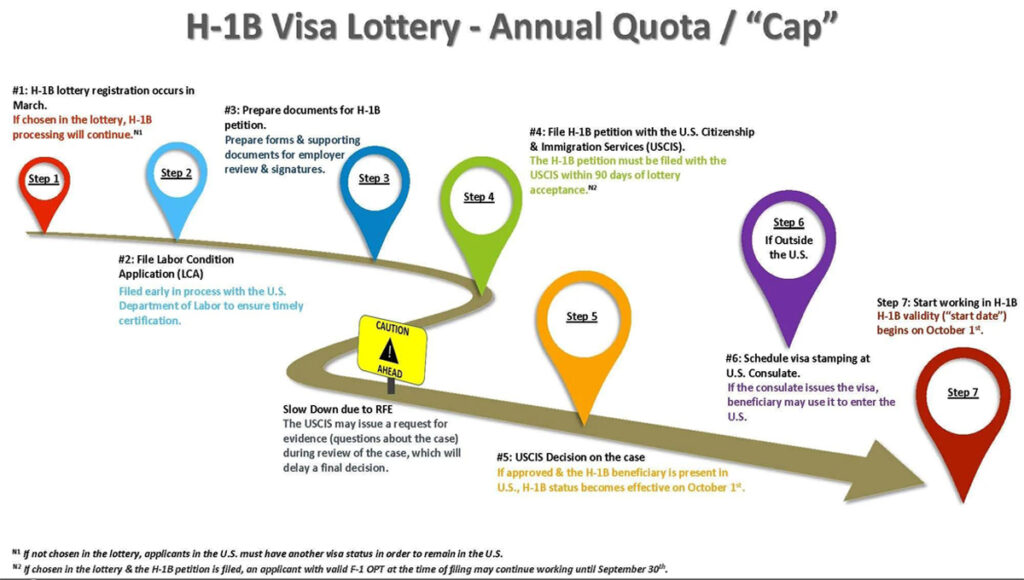
Step 1: Employer Registration
The sponsoring employer submits an electronic registration through the USCIS H-1B registration system during the designated filing period.
Step 2: H-1B Lottery Selection
Since demand often exceeds the annual cap, USCIS conducts a lottery to select eligible registrations. Selected applicants may proceed with filing a full H-1B petition.
Step 3: Labor Condition Application (LCA)
The employer files a Labor Condition Application with the U.S. Department of Labor, confirming compliance with wage and workplace requirements. H-1B Visa Requirements
Step 4: File Form I-129
After LCA approval, the employer submits Form I-129 along with supporting documentation to USCIS.
Step 5: USCIS Review and Decision
USCIS reviews the petition and may approve, deny, or issue a Request for Evidence (RFE) if additional documentation is needed.
Tips for a Successful H-1B Application
- Ensure all documents are accurate and complete.
- Submit registrations within the official filing period.
- Maintain consistency between educational credentials and job requirements.
- Respond promptly to any USCIS requests.
- Work with experienced immigration professionals when necessary.
Conclusion
The H-1B visa remains a valuable option for skilled professionals seeking employment opportunities in the United States. By understanding the 2026 application process, eligibility requirements, and filing procedures, applicants can improve their chances of securing approval and advancing their careers in the U.S. Careful preparation and timely filing are key factors in a successful H-1B visa application.



 Immigration Fleet Law Firm