
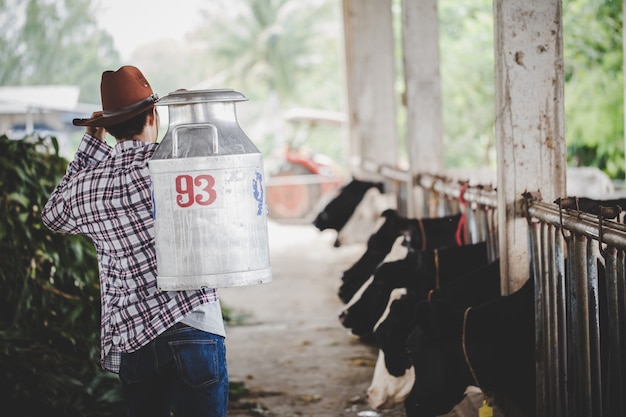
If you work on a dairy farm or your employer is thinking about hiring agricultural workers from abroad, there is important news coming out of U.S. Citizenship and Immigration Services (USCIS) that you need to know about. On June 17, 2026, USCIS issued a new policy memorandum — officially numbered PM-602-0200 — that clarifies how the H-2A agricultural worker visa applies to dairy farm workers. This is a significant development for thousands of immigrant workers and the farm businesses that rely on them across the United States.
For many immigrant families, the H-2A visa is a lifeline — a legal path to work in the U.S. in agriculture while supporting loved ones back home. But dairy farming has long occupied an uncertain space in the H-2A program because cows need care every single day of the year. Does that mean dairy work can never qualify as “temporary or seasonal”? USCIS has now answered this question clearly — and the answer matters a great deal for dairy workers and their employers in 2026.
This article breaks down what the new USCIS guidance says, what it means for H-2A dairy visa applicants, and what workers and employers should keep in mind going forward.
What Is the H-2A Visa and Who Does It Cover?
The H-2A visa is a temporary agricultural worker visa that allows U.S. employers to bring foreign nationals to the United States to fill seasonal or temporary agricultural jobs when there are not enough available U.S. workers. Congress specifically included “dairying” and work on a “dairy” in the legal definition of agricultural labor, which means dairy farm workers have always been eligible in principle.
However, a key requirement of the H-2A program is that the employer’s need for the workers must be temporary or seasonal in nature — not year-round and permanent. This is where dairy farmers have historically faced challenges, because cows need to be milked, fed, and cared for every day, all year long. Critics of H-2A for dairy argued this meant dairy work could never be truly “temporary.” The new USCIS memo puts that argument to rest — but adds important nuances that workers and employers must understand.
What Does the New USCIS Policy Memo Say?
Policy Memorandum PM-602-0200, which took effect June 17, 2026, provides the following key guidance:
- Dairy qualifies for H-2A: USCIS confirms that dairy farm work is included in the H-2A program based on Congress’s own definition of “agricultural labor.” Dairy employers do not need a special process — they follow the same standard H-2A visa and labor certification requirements as any other agricultural employer.
- The question is about the employer’s need, not the job itself: USCIS clarified that the central test is not whether dairy work happens year-round, but whether the employer’s need for those specific workers is temporary or seasonal. This is an important distinction. An employer may have a seasonal spike in labor needs — for example during calving season, planting season for feed crops, or a period when full-time U.S. workers are unavailable — that can justify an H-2A petition.
- Case-by-case review: Every H-2A petition for a dairy position will be reviewed individually based on all the facts presented. USCIS officers will look at job duties, work schedules, filing history, and whether petitions appear to cover the same ongoing labor need year after year without a break.
- DOL certification is helpful but not automatic: A temporary labor certification from the Department of Labor (DOL) will generally support the petition, but it is not automatically controlling if USCIS has evidence that the job is not truly temporary or seasonal in nature.
When Could a Dairy H-2A Petition Be Denied?
The new memo also contains an important warning for employers: back-to-back H-2A petitions for the same dairy position without a meaningful break in employment could be denied. If an employer files petition after petition to fill what is essentially the same permanent job, USCIS may determine that the need is ongoing and not temporary — and deny the petition.
USCIS officers will specifically look at:
- Whether multiple petitions cover the same labor need over a long continuous period
- Whether the same workers are being re-petitioned without any meaningful gap in employment
- Whether job duties and work schedules suggest a permanent staffing arrangement rather than a temporary need
Importantly, USCIS clarified that prior approvals do not guarantee future approvals. Just because a previous H-2A dairy petition was approved does not mean the next one will be. Each petition is evaluated on its own facts. Likewise, a prior denial does not permanently bar an employer from filing again — if the facts and circumstances change, a new petition may succeed.
When Can Dairy Employers File Consecutive H-2A Petitions?
Not all consecutive filings will be denied. The USCIS memo recognizes that some dairy operations do have genuine seasonal cycles that can justify separate petitions filed back to back. Specifically:
- Distinct seasonal cycles: If a dairy farm has clearly different labor needs in different seasons — for example, different job duties in spring and summer compared to fall and winter — it may be able to justify separate H-2A petitions tied to those cycles.
- Breeding and calving seasons: Dairies with distinct breeding or calving seasons may be able to demonstrate that their need for extra workers is genuinely tied to those biological cycles, making a temporary need argument more compelling.
- Changing facts: If the nature of the job or the employer’s operation changes meaningfully from one petition period to the next, that can support a new petition even when the same position was previously denied.
The key is documentation. Employers who want to use H-2A for dairy workers should carefully document the seasonal or temporary nature of each specific labor need, keep records of job duties and work schedules, and work with an experienced immigration attorney to prepare a strong petition.
What This Means for Immigrant Dairy Workers and Their Families
For immigrant workers already working or hoping to work on dairy farms in the United States, this new guidance is both encouraging and a reminder to pay careful attention to the terms of your visa.
If you are currently on an H-2A visa working at a dairy farm, your status is tied to the specific petition your employer filed. If your employer’s next petition is denied because USCIS determines the need is not truly temporary, you could be affected. It is important to stay in close contact with your employer and make sure you understand what happens to your visa status if a renewal petition is not approved.
If you are hoping to come to the United States through an H-2A dairy visa, this memo is good news in that it confirms dairy work does qualify — but it also means your employer needs to properly document why the work is temporary or seasonal rather than permanent. A well-prepared petition with solid documentation gives you the best chance of approval.
If you are a U.S. permanent resident or citizen whose family members work in agriculture abroad and may be interested in the H-2A program, this guidance is a reminder that the program provides a legal, regulated pathway — but it has strict requirements that both the employer and the worker must meet.
Practical Steps: What Workers and Employers Should Do Now
Whether you are an immigrant worker, a dairy farm employer, or a family member trying to understand the process, here are practical steps to take in light of this new USCIS guidance:
- Employers: Review your H-2A filing history for dairy positions. If you have been filing consecutive petitions for the same positions without a break, consult an immigration attorney to assess your risk and strengthen your documentation of seasonal or temporary need.
- Workers: Understand the terms of your H-2A visa. Know when your authorized period of stay ends and ask your employer about the status of any renewal petition. Never overstay your visa — the consequences can affect your ability to return to the U.S. in the future.
- Both employers and workers: Work with a qualified immigration attorney who understands the H-2A program and the new USCIS dairy guidance. Proper documentation and legal guidance can make the difference between an approval and a denial.
- Stay informed: USCIS policies can change. Prior approvals are not a guarantee of future approvals. Always track updates from USCIS and trusted immigration sources.
Conclusion: New Clarity for Dairy Workers, But Care Is Still Required
The USCIS Policy Memo PM-602-0200, effective June 17, 2026, is a significant and welcome clarification for the dairy industry and for immigrant agricultural workers. It confirms that dairy farm work can qualify for the H-2A visa program and that each petition will be reviewed fairly on a case-by-case basis. At the same time, the guidance reminds employers and workers that H-2A has genuine requirements — the labor need must be temporary or seasonal, not a cover for permanent staffing.
For immigrants and their families, the message is clear: the door is open, but the process requires care, honest documentation, and expert legal guidance. If you or someone you love is considering the H-2A dairy worker visa pathway, now is an excellent time to speak with a qualified immigration attorney about your specific situation.
For full legal details and authoritative guidance, visit the American Immigration Lawyers Association at aila.org or consult a qualified immigration attorney in your area.




 Immigration Fleet Law Firm