
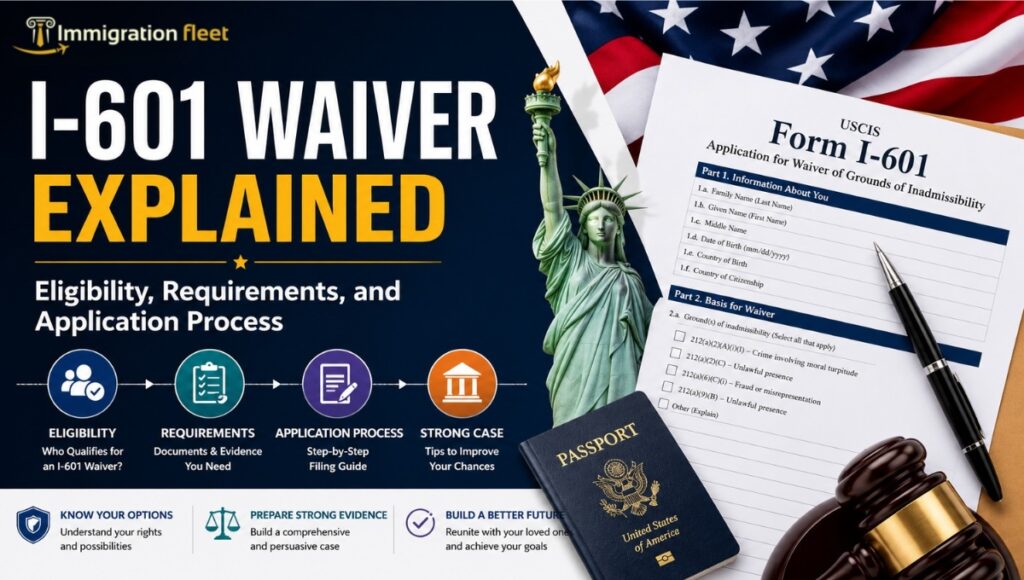
An I-601 waiver can provide an important pathway for certain individuals who are otherwise unable to obtain a U.S. immigrant visa, adjustment of status, or admission because they are considered inadmissible under U.S. immigration law. Understanding the eligibility requirements, supporting evidence, and application process is essential when preparing a strong waiver case.</p>
What Is an I-601 Waiver?
Form I-601, Application for Waiver of Grounds of Inadmissibility, is used by eligible applicants seeking a waiver of certain immigration-related grounds of inadmissibility. Depending on the circumstances, inadmissibility may involve unlawful presence, fraud or misrepresentation, certain criminal grounds, or other issues covered by applicable immigration law.
An I-601 waiver does not automatically guarantee visa approval or admission to the United States. Applicants must first determine whether the specific ground of inadmissibility is legally waivable and whether they meet all applicable requirements.
Who May Qualify for an I-601 Waiver?
Eligibility depends on the particular ground of inadmissibility and the applicant’s immigration circumstances. In many cases, an applicant must demonstrate that refusal of admission would result in extreme hardship to a qualifying U.S. citizen or lawful permanent resident relative.
Evidence may include medical records, financial documentation, psychological evaluations, family circumstances, educational considerations, and country-condition information. The specific evidence required varies according to the facts of each case.
How to Apply for an I-601 Waiver
The process generally begins by identifying the applicable ground of inadmissibility and determining whether a waiver is available. The applicant then prepares Form I-601 along with supporting documentation and evidence addressing the applicable legal requirements.
A strong application should present the facts clearly and organize supporting evidence logically. Where extreme hardship is required, the submission should explain how the qualifying relative would experience hardship beyond the ordinary consequences of family separation or relocation.
Why Professional Legal Guidance Matters
I-601 waiver cases can involve complex legal requirements and extensive documentation. A carefully prepared application can help ensure that relevant facts and evidence are presented effectively. Immigration professionals can assess eligibility, identify potential weaknesses, and help develop an evidence-based waiver strategy. U.S. immigration waiver
Conclusion
The I-601 waiver may offer an important solution for eligible individuals facing certain grounds of inadmissibility. Because every case depends on its specific facts and applicable law, understanding eligibility and preparing comprehensive supporting evidence are critical steps toward a successful application.




 Immigration Fleet Law Firm