

Family-based immigration is one of the most common ways individuals can obtain lawful permanent residence in the United States. The U.S. immigration system provides several pathways for U.S. citizens and lawful permanent residents (green card holders) to sponsor qualifying family members. Understanding these categories, eligibility requirements, and application procedures can help families plan their immigration journey more effectively. Family Immigration Pathways
What Is Family-Based Immigration?
Family-based immigration allows eligible U.S. citizens and permanent residents to petition for certain relatives to immigrate to the United States. The process generally begins with filing Form I-130, Petition for Alien Relative, with U.S. Citizenship and Immigration Services (USCIS).
The relationship between the petitioner and beneficiary determines which immigration category applies. Some relatives may qualify for an immigrant visa without waiting for a visa number, while others may be subject to annual numerical limits.
Immediate Relative Immigration
Immediate relatives of U.S. citizens generally have a more direct immigration pathway. This category includes:
- Spouses of U.S. citizens
- Unmarried children under 21 of U.S. citizens
- Parents of U.S. citizens who are at least 21 years old
Immediate relative visas are not subject to the same annual numerical limitations as family preference categories. However, applicants must still satisfy applicable eligibility, documentation, admissibility, and procedural requirements.
Family Preference Categories
Family preference categories apply to certain relatives of U.S. citizens and lawful permanent residents. These categories include unmarried adult children of U.S. citizens, spouses and unmarried children of permanent residents, married children of U.S. citizens, and siblings of adult U.S. citizens.
Because these categories have annual visa limits, applicants may experience significant waiting periods. The priority date and monthly Visa Bulletin determine when an immigrant visa or adjustment-of-status application may move forward, depending on the applicable category and country of chargeability.
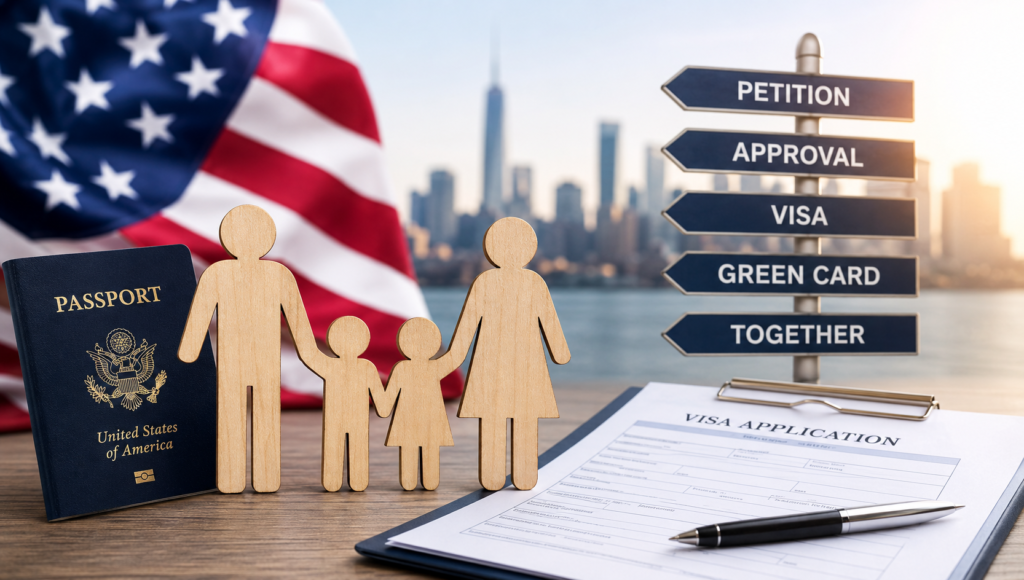
Adjustment of Status vs. Consular Processing
Eligible beneficiaries already in the United States may be able to apply for adjustment of status to become permanent residents without leaving the country. Applicants outside the United States generally complete the process through consular processing at a U.S. embassy or consulate.
The appropriate pathway depends on factors such as the beneficiary’s location, immigration status, visa availability, and eligibility. Family immigration USA
Common Challenges in Family Immigration
Family-based immigration cases can involve complicated documentation, visa backlogs, inadmissibility issues, prior immigration violations, or questions about the validity of a qualifying relationship. Errors in petitions or supporting evidence can also cause delays.
Working with an experienced immigration professional can help families understand applicable requirements and prepare a complete application.
Conclusion
Family immigration pathways provide important opportunities for families to reunite in the United States. Whether through an immediate relative category or a family preference category, understanding eligibility, visa availability, and processing options is essential. Because immigration rules and procedures can change, applicants should review current USCIS and Department of State requirements before filing.




 Immigration Fleet Law Firm