
The H-2B Program
The H-2B nonimmigrant worker program allows eligible U.S. employers to temporarily hire foreign workers for nonagricultural jobs when there is a temporary need for workers. Because Congress limits the number of H-2B workers who may receive visas or H-2B status each fiscal year, employers should closely monitor the annual cap and filing deadlines.
The program is important for businesses with seasonal, peak-load, intermittent, or other temporary staffing needs. Understanding the cap early can help employers plan recruitment, petition filing, and employment start dates.
What Is the H-2B Cap?
The H-2B cap is the statutory limit on the number of foreign nationals who may receive H-2B visas or otherwise be granted H-2B status during a fiscal year. The standard annual limit is 66,000 workers.
The cap is divided into two portions:
- 33,000 workers for employment beginning from October 1 through March 31.
- 33,000 workers for employment beginning from April 1 through September 30.
If numbers allocated to the first half remain unused, they may become available for the second half. Unused H-2B numbers do not carry over into the next fiscal year.
Fiscal Year 2027 H-2B Cap Update
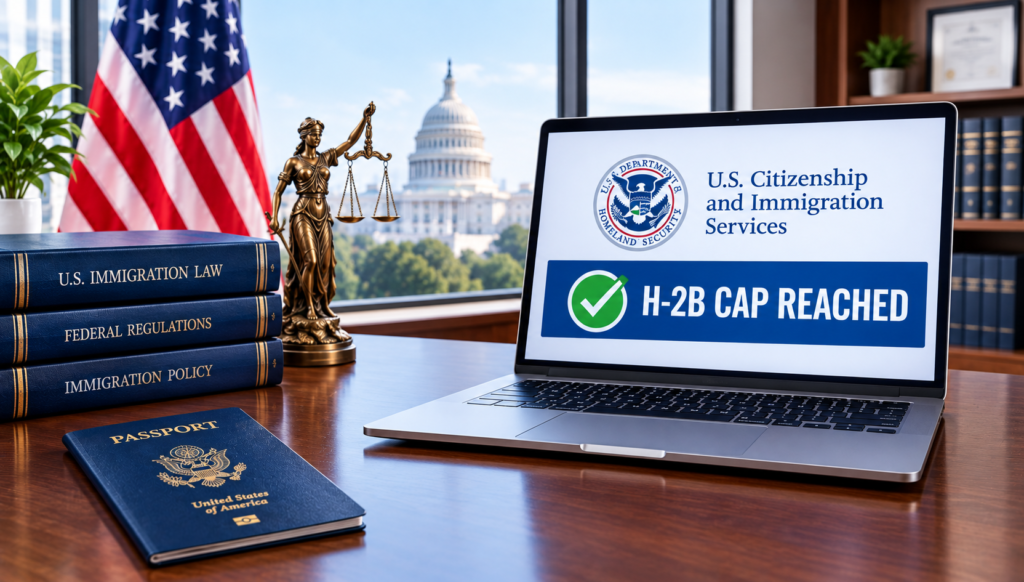
USCIS announced on September 11, 2026, that it had received enough petitions to reach the congressionally mandated H-2B cap for the first half of fiscal year 2027.
September 4, 2026, was the final receipt date for cap-subject H-2B petitions requesting employment start dates before April 1, 2027. The first-half allocation is 33,000 workers, while the second-half allocation is also 33,000, subject to applicable availability and any unused first-half numbers.
Which H-2B Workers Are Exempt from the Cap?
Not every H-2B worker is counted against the annual numerical limit. Generally, H-2B workers already in the United States who extend their stay, change employers, or change the terms and conditions of employment are not subject to the cap. A worker already counted against the cap during the same fiscal year may also avoid being counted again when properly identified in a subsequent petition.
H-4 spouses and children of H-2B workers do not count toward the cap. Certain categories are also exempt, including fish roe processors, fish roe technicians, and supervisors of fish roe processing.
Workers performing labor or services in Guam or the Commonwealth of the Northern Mariana Islands may also qualify for a statutory exemption through December 31, 2029.
What Happens When the H-2B Cap Is Reached?
Once the H-2B cap is reached, USCIS generally accepts petitions only for workers who are exempt from, or otherwise not subject to, the cap. Reaching the cap can affect workforce planning, recruitment schedules, and anticipated employment start dates.
Employers that rely on temporary foreign workers should monitor official USCIS announcements and prepare filings as early as possible. Since H-2B availability can change, current agency guidance should always be reviewed before filing.
Understanding the FY 2027 Cap Count
USCIS cap-count figures are preliminary estimates intended to give the public an approximate picture of beneficiaries who may be counted toward the annual limit. The number associated with approved or pending petitions can exceed the statutory cap because petitions may later be withdrawn or denied, or an approval may not result in a visa being issued.
For FY 2027, the key first-half information is:
- First half: 33,000 H-2B workers.
- Final receipt date: September 4, 2026.
- First-half cap: Reached, as announced by USCIS on September 11, 2026.
- Second half: 33,000, with unused first-half numbers potentially becoming available.
Reporting H-2B Fraud and Abuse
Employers and workers should take potential H-2B fraud or abuse seriously. USCIS provides an online reporting process for tips, alleged violations, and other relevant information.
U.S. workers and H-2B workers who believe they or others may be victims of fraud or abuse can use the appropriate USCIS reporting channel.
Key Takeaways for H-2B Employers
The H-2B cap is an important consideration for employers planning to hire temporary nonagricultural workers. The standard annual limit is 66,000, divided into 33,000 workers for each half of the fiscal year.
For FY 2027, the first-half cap has been reached, with September 4, 2026, serving as the final receipt date for qualifying petitions requesting employment before April 1, 2027.
Employers should also determine whether a prospective worker is exempt from the cap before assuming that a cap number is required.
Because H-2B rules, agency procedures, and supplemental allocations can change, employers should rely on current USCIS guidance and qualified immigration counsel when evaluating their options.
FY 2027 H-2B Cap Snapshot
| Cap Type | Cap Amount | Status | Date |
|---|---|---|---|
| First Half of FY 2027 | 33,000 | Cap reached | Sept. 4, 2026 |
| Second Half of FY 2027 | 33,000* | Potential allocation | FY 2027 |
*Unused first-half numbers may be available for the second half; unused fiscal-year cap numbers do not carry into the following fiscal year.




 Immigration Fleet Law Firm