
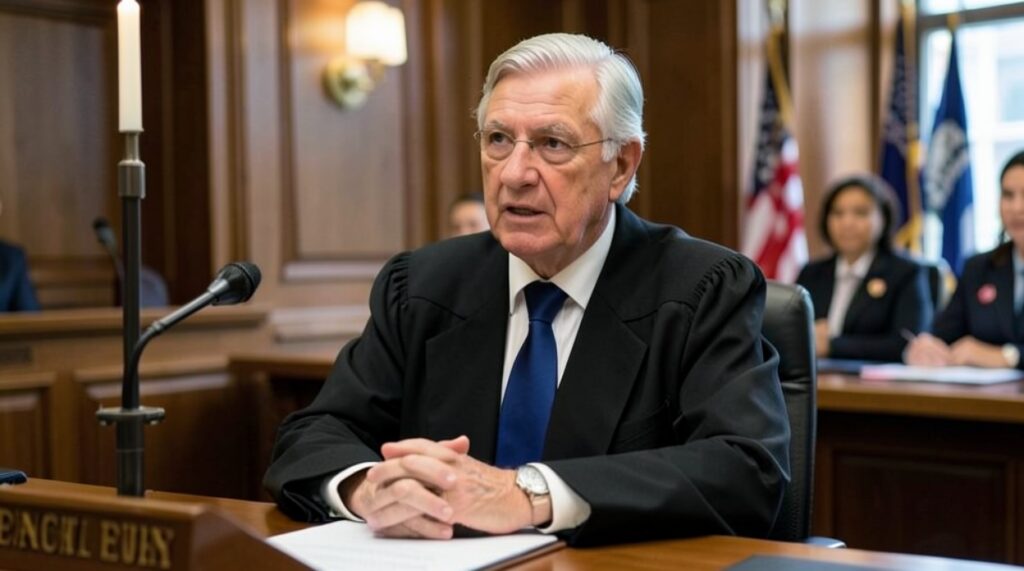
A federal district court has temporarily blocked a U.S. Department of Homeland Security (DHS) policy that prevented many detained noncitizens from completing required biometric procedures for pending immigration applications. On October 7, 2026, the U.S. District Court for the District of Columbia issued an order in J.Z. v. U.S. Department of Homeland Security, staying the challenged policy while the litigation continues. The decision restores the previous arrangement under which DHS collected biometrics from detained individuals with pending applications before U.S. Citizenship and Immigration Services (USCIS).
The ruling is significant for detained immigrants seeking immigration relief because missing biometric requirements can prevent USCIS from processing applications, potentially leaving applicants unable to pursue important immigration benefits.
What Was the DHS Biometrics Policy?
In December 2025, DHS announced a policy generally discontinuing biometric collection for detained noncitizens who had pending immigration petitions or applications with USCIS. The policy stated that biometrics generally would not be collected from detained individuals unless they were in removal proceedings and had a pending application or petition filed with the Executive Office for Immigration Review (EOIR).
This distinction created a significant difference between applications handled by immigration courts and those processed by USCIS. Many forms of immigration relief must be filed with USCIS rather than an immigration judge, meaning affected detainees could no longer complete a required procedural step while in custody.
The policy also prohibited USCIS personnel and contractors from traveling to detention facilities to collect biometrics and removed previous guidance assigning U.S. Immigration and Customs Enforcement (ICE) responsibility for facilitating biometric collection. DHS also rescinded an internal agreement that had required ICE to assist with these procedures.
Why Are Biometrics Important in Immigration Applications?
Biometrics are identifying information collected to help establish an applicant’s identity and support background and security checks. Depending on the application, these procedures may include fingerprints, photographs, and other identifying information.
USCIS may require biometrics when adjudicating applications for immigration benefits. These requirements can affect individuals applying for adjustment of status, certain humanitarian protections, special immigrant juvenile status, T visas, U visas, and other forms of immigration relief.
When applicants cannot complete required biometric procedures, USCIS may be unable to move forward with their cases. In some circumstances, failure to attend a scheduled appointment can result in an application being denied.
For individuals held in immigration detention, complying with an appointment outside the facility may be difficult or impossible without assistance from the government. The challenged policy therefore created a procedural obstacle for detained applicants who depended on DHS to facilitate biometric collection.
What Did the Federal Court Decide?
In J.Z. v. DHS, six detained noncitizens challenged the policy, arguing that it violated the Administrative Procedure Act (APA). They contended that DHS had changed its approach without providing an adequate explanation and had failed to consider important consequences for people whose immigration applications required biometrics.
Judge Amir H. Ali found that the plaintiffs were likely to succeed on their claim that the policy was arbitrary and capricious under the APA. At this preliminary stage, the court concluded that DHS had not adequately explained its decision to stop collecting biometrics or sufficiently considered the consequences of the change.
The court also found that the plaintiffs had met the requirements for preliminary relief, including demonstrating a likelihood of irreparable harm and showing that the balance of equities and the public interest supported relief.
The court granted a stay under Section 705 of the APA but denied the request for a separate preliminary injunction. This distinction matters: the court temporarily suspended the challenged agency policy and its implementation rather than issuing the additional injunction requested by the plaintiffs.
How Does the Court’s Order Affect Detained Noncitizens?
The order restores the previous status quo under which DHS collected biometrics from detained individuals with pending USCIS applications. It stays the December 2025 policy announcement, the accompanying policy alert, related USCIS Policy Manual revisions, and the rescission of the internal agreement requiring ICE to facilitate biometric collection.
This development may help affected detainees complete a procedural requirement that is necessary for their immigration cases to proceed.
However, the ruling does not automatically approve any immigration application, grant legal status, guarantee work authorization, or require the release of anyone from detention. Applicants must still satisfy the eligibility requirements and other procedural obligations applicable to their cases.
The decision also does not eliminate the government’s authority to conduct background checks or require biometrics when authorized by law. Instead, it addresses the legality of the particular policy that stopped biometric collection for the affected category of detained applicants.
Which Immigration Applications Could Be Affected?
The policy had implications for detained individuals with applications that USCIS must adjudicate. Depending on the applicant’s circumstances, these may include:
- Adjustment of status: Applications to obtain lawful permanent resident status from within the United States.
- T visas: Certain protections for eligible victims of severe forms of human trafficking.
- U visas: Immigration relief for qualifying victims of certain crimes who meet statutory requirements.
- Special immigrant juvenile status: A classification for eligible children who meet the relevant legal criteria.
- Other USCIS applications: Additional immigration petitions or applications requiring biometric processing.
Not every application follows the same procedures, and eligibility depends on the relevant law and individual facts. Applicants should confirm whether biometrics are required for their specific case and whether the court’s order affects the applicable procedure.
What Should Immigration Attorneys and Applicants Do Next?
Immigration attorneys representing detained clients should review pending applications, outstanding biometric notices, and any denials or delays connected to missed biometric appointments. They should also document communications with ICE and USCIS and determine how to request or arrange biometric collection under the restored procedures.
According to guidance reported by the American Immigration Lawyers Association, class counsel has asked attorneys to contact them if DHS refuses to collect biometrics for a detained client with a pending USCIS application. The requested information includes the detention facility, application type, attempts to contact ICE or USCIS, agency responses, and the client’s authorization concerning disclosure of identifying information.
Applicants and their families should avoid assuming that the court order automatically reschedules an appointment or reopens a denied case. Individual circumstances may require prompt legal attention, particularly where a deadline or adverse decision is involved.
What Happens Next in the Litigation?
The October 7 order is an interim judicial measure, not a final judgment resolving every issue in the case. The court directed the government to submit a status report by October 21, 2026, explaining its compliance with the order.
The litigation will continue to determine whether the challenged policy ultimately violates the APA. The case may also clarify how federal agencies must explain policy changes that affect access to immigration application procedures for people in government custody.
Conclusion
The federal court’s decision to stay the DHS biometric collection policy is an important development for detained noncitizens with pending USCIS applications. By temporarily restoring the previous biometric collection arrangements, the court has addressed a procedural barrier that could prevent applicants from pursuing immigration relief.
Nevertheless, the order does not guarantee approval or release from detention. Affected individuals and their attorneys should review their cases, monitor agency implementation, and seek qualified immigration legal advice to determine the appropriate next steps.



 Immigration Fleet Law Firm