
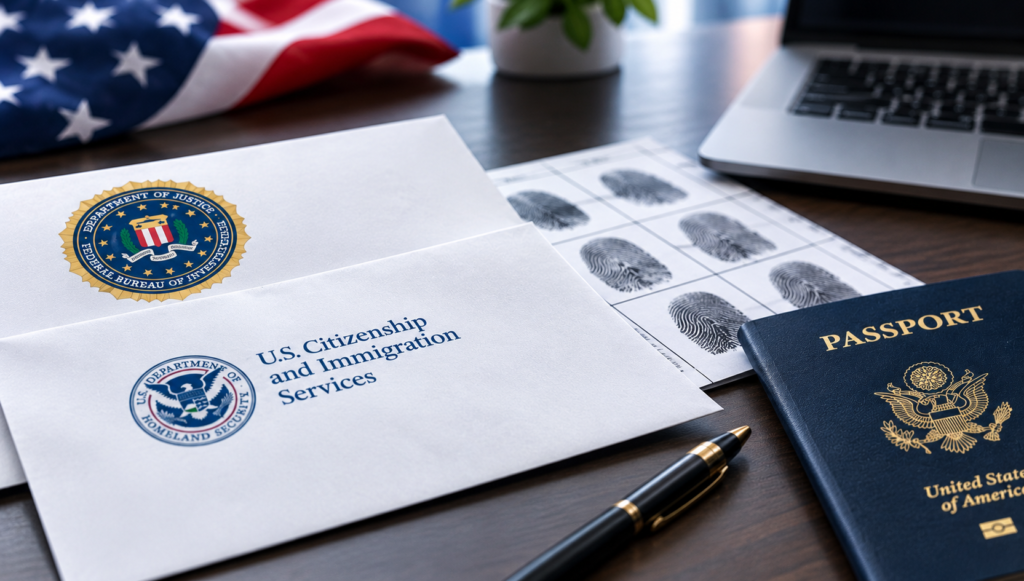
USCIS correspondence concerning FBI biometrics monitoring has become a topic of discussion among immigration practitioners, particularly as attorneys report receiving notices through different channels and with varying levels of identifying information. These communications raise practical questions about their purpose, the individuals affected, and the steps attorneys should take when a notice arrives.
For family-based immigration practitioners, understanding these letters is important because background checks and identity verification can intersect with adjustment of status, naturalization, and other immigration benefit applications. Careful review and timely communication with clients can help attorneys respond appropriately while avoiding unnecessary confusion.
Understanding FBI Biometrics and Background Checks
USCIS uses identity verification and background-check procedures as part of its adjudication of immigration benefit requests. Depending on the application and applicable requirements, these procedures may involve fingerprints, photographs, biographical information, and checks against relevant government databases.
The FBI plays a role in processing fingerprint-based identity and criminal-history checks. These checks can help USCIS evaluate information relevant to an immigration application. However, a biometrics-related communication does not necessarily mean that an applicant has committed an offense, that USCIS has identified a disqualifying issue, or that an application will be denied.
Practitioners should distinguish between routine identity verification, requests for additional information, notices concerning background-check results, and communications that require a specific response. The wording of the letter, the issuing agency, and any stated deadline are essential to determining the appropriate next steps.
What Practitioners Are Reporting
Recent discussions among immigration practitioners have highlighted variations in how FBI-related notices are delivered. Reported scenarios include letters mailed directly to clients, notices sent to attorneys’ offices on behalf of clients, and communications addressed to attorneys without sufficient information to identify the associated applicant.
These variations can create administrative challenges. An attorney may receive a letter without a receipt number or other information that clearly connects it to a pending matter. A client may receive correspondence without understanding whether action is required or whether the letter relates to an existing application.
At present, individual reports should not automatically be interpreted as evidence of a universal change in USCIS policy or a new monitoring requirement affecting every applicant. Practitioners should rely on the actual notice, applicable agency guidance, and verified case information rather than assumptions based on isolated experiences.
Recommended Steps When a Letter Arrives
A consistent intake and review process can help law firms manage these communications effectively.
1. Verify the recipient and issuing agency. Review the letterhead, return address, addressee, and any agency contact information. Determine whether the notice was issued by USCIS, the FBI, or another government entity. Do not assume that every FBI-related letter requires the same response.
2. Identify the associated case. Look for the applicant’s name, date of birth, receipt number, A-number, or other identifying information. If the letter is addressed to the attorney but does not identify the client, check relevant case records and contact the issuing agency through verified channels when appropriate.
3. Review the requested action and deadline. Determine whether the communication is informational, requests documentation, directs the recipient to complete a procedure, or requires a response by a particular date. Calendar any applicable deadline and retain a copy of the correspondence.
4. Communicate with the client. Explain what the notice says, what remains unclear, and whether any action is required. Avoid telling clients that a routine background-check communication indicates a criminal concern or an impending denial unless the facts and official notice support that conclusion.
5. Document the response. Preserve the original letter, envelope, delivery information, related correspondence, and notes of any follow-up. If clarification is needed, document the steps taken and any response received.
Does Continued Monitoring Affect Immigration Eligibility?
Practitioners should be cautious about drawing conclusions from references to continued or ongoing FBI monitoring. A letter mentioning biometrics, background checks, or continued review does not, by itself, establish that USCIS has imposed a new monitoring program, identified adverse information, or changed an applicant’s eligibility.
The consequences depend on the specific communication, the underlying records, the application involved, and the applicable law and agency procedures. If a notice identifies potentially adverse information or requests an explanation, counsel should assess the issue individually, determine whether additional records are needed, and advise the client based on the available evidence.
Attorneys should also avoid making representations about the scope or duration of FBI monitoring without reliable documentation. Where the letter is ambiguous, obtaining clarification from the issuing agency may be more appropriate than speculating about its purpose.
The Value of Sharing Practitioner Experiences
The Family Section listserv offers an important forum for comparing experiences and identifying potential trends. When discussing FBI-related notices, members can help colleagues by sharing relevant, nonconfidential details, such as the type of notice received, the agency identified on the letter, the general case category, and whether a response was requested.
Client names, A-numbers, receipt numbers, dates of birth, and other personally identifying information should not be shared on public or broadly accessible forums. Any examples should be appropriately anonymized.
Collective observations may help practitioners recognize recurring administrative issues and determine whether additional clarification from USCIS or the FBI is warranted. Nevertheless, anecdotal reports should be distinguished from confirmed agency policy.
Conclusion
USCIS and FBI-related biometrics communications require careful review, accurate case identification, and clear client communication. Although practitioners are reporting different notice-delivery experiences, each letter should be evaluated on its own terms rather than treated as proof of a broader policy change.
By maintaining consistent intake procedures, preserving documentation, verifying official instructions, and sharing anonymized observations with colleagues, immigration practitioners can respond more effectively to these communications while minimizing unnecessary concern for clients.
As additional information becomes available, Family Section members are encouraged to continue exchanging experiences and monitoring official agency guidance. A coordinated, evidence-based approach will help the immigration law community better understand these notices and their practical implications.




 Immigration Fleet Law Firm