
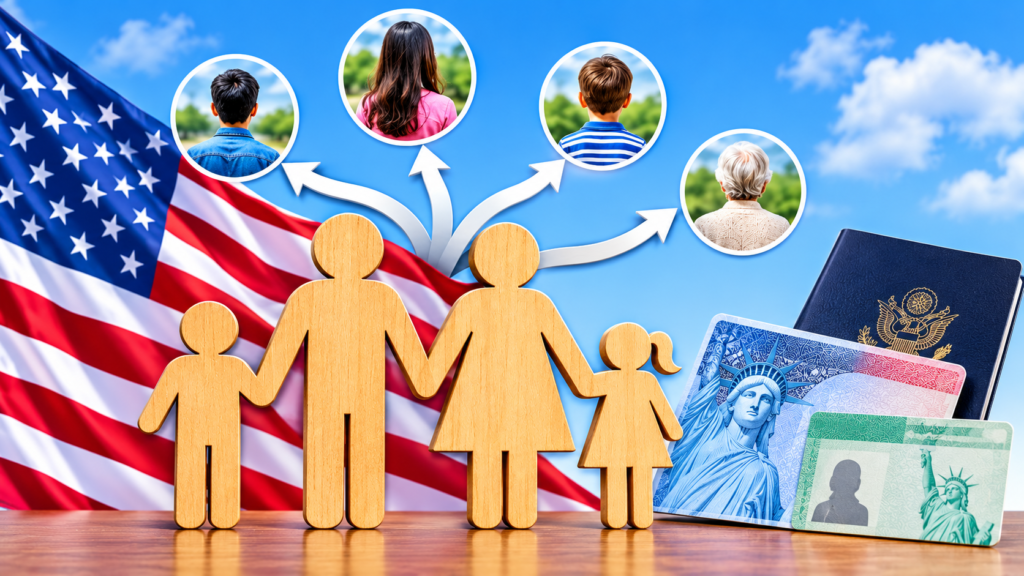
When a family applies for a green card or a work visa, one person is usually the main applicant. The spouse and children often come along as derivative beneficiaries. Understanding how derivative beneficiaries work in family and employment petitions helps families plan their timeline, protect their status and avoid costly surprises.
What Is a Derivative Beneficiary?
A derivative beneficiary is a family member who receives immigration benefits through the principal beneficiary’s petition instead of filing a separate petition. In most cases, this means the principal’s spouse and unmarried children under 21. The derivative shares the principal’s category and priority date, so the family generally moves forward together.
Derivative Beneficiaries in Employment-Based Petitions
In employer-sponsored cases, the worker is the principal beneficiary. This applies to nonimmigrant petitions such as H-1B, L-1 and O-1, and to immigrant petitions such as an I-140 filed after PERM labor certification.
For temporary visas, derivatives receive dependent status: H-4 for H-1B families, L-2 for L-1, E-2D for E-2 investors and O-3 for O-1 and O-2 holders. For employment-based green cards, the spouse and children can be included in the same case and file their own Form I-485 when a visa number is available.
Rights differ by status. L-2 spouses are considered work-authorized incident to status, while H-4 spouses can work only if they qualify for an H-4 EAD. Children can generally study but cannot work.
Derivative Beneficiaries in Family-Based Petitions
Family-based cases work differently. When a U.S. citizen or green card holder files Form I-130 in a family preference category, such as F3 (married sons and daughters of U.S. citizens) or F4 (siblings of U.S. citizens), the principal’s spouse and children can usually be included as derivatives.
Immediate relatives of U.S. citizens, meaning spouses, unmarried children under 21 and parents, are not subject to annual visa limits. These relatives are generally petitioned for individually rather than through derivative status. Knowing which category applies is the first step in planning a family’s filing strategy.
Why Priority Dates Matter for Derivatives
A derivative shares the principal’s priority date. When that date becomes current on the Visa Bulletin, the whole family can move to the next step. In backlogged categories, the wait can last many years, and family circumstances can change during that time. Marriages, births and children turning 21 all affect who can be included.
Aging Out and the Child Status Protection Act
To qualify as a derivative child, a person must be unmarried and under 21. Long waits can cause a child to “age out” before a visa becomes available. The Child Status Protection Act (CSPA) may help by adjusting how a child’s age is calculated, often by subtracting the time the petition was pending. Conditions apply, including timely action once a visa number is available. Marriage ends a child’s eligibility, and CSPA calculations are technical, so each case should be reviewed carefully.
Common Mistakes to Avoid
- Leaving an eligible spouse or child off the filings
- Missing deadlines that protect a child’s eligibility under CSPA
- Letting dependent status lapse when the principal changes jobs or status
- Assuming every dependent visa carries the same work and study rights
- Not tracking the priority date and Visa Bulletin movement
How an Immigration Attorney Can Help
Derivative cases involve several moving parts: the right category, the right timing and the right documents for every family member. A qualified attorney can coordinate filings, track priority dates, flag aging-out risks and protect each family member’s status as the case progresses.
At Immigration Fleet, we support spouses, children and principal applicants through every stage of the process. If you want to understand how derivative beneficiary rules apply to your family, book a consultation with our team today.




 Immigration Fleet Law Firm