
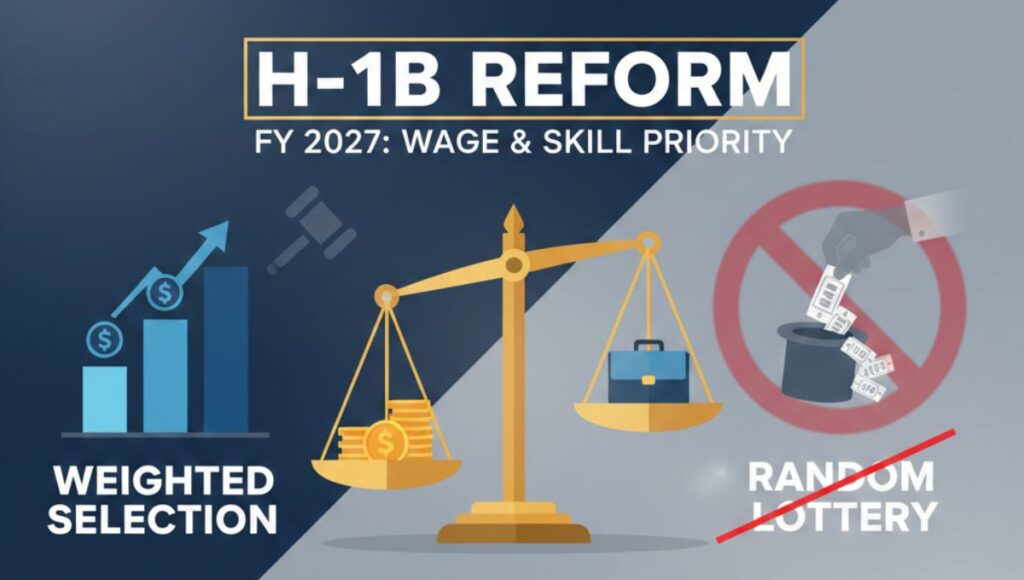
The U.S. Department of Homeland Security (DHS) has finalized a rule significantly reforming the H-1B cap selection process. Effective February 27, 2026, the new rule replaces the prior random lottery selection system with a weighted selection framework that increases the likelihood of selection for H-1B beneficiaries who are higher-skilled and higher-paid. This revised selection system will first apply to the Fiscal Year 2027 H-1B cap registration period.
Under statute, the H-1B program authorizes U.S. employers to temporarily employ foreign nationals in specialty occupations requiring the theoretical and practical application of highly specialized knowledge. The program remains subject to the annual statutory cap of 65,000 H-1B visas, with an additional 20,000 visas reserved for U.S. advanced-degree holders.
Purpose and Policy Rationale
DHS explained that the previous random lottery was vulnerable to abuse and manipulation, particularly where employers submitted large volumes of registrations for lower-paid positions with the intent to increase the odds of selection. DHS further stated that these practices jeopardized labor market protections for U.S. workers by facilitating the importation of lower-wage foreign labor.
The new rule is intended to:
- Prioritize higher-wage and higher-skilled H-1B candidates
- Incentivize legitimate, high-skill sponsorship activity
- Strengthen safeguards for U.S. workers’ wages, working conditions, and job opportunities
- Better align the H-1B program with congressional intent
- Promote the United States’ global competitiveness in innovation, research, and technology sectors
Weighted Selection Criteria
The final rule introduces a weighted cap selection methodology, under which registrations associated with higher skill and compensation levels will receive greater probability of selection relative to those tied to lower-paid roles. While DHS will continue to allow participation by employers offering lower wage levels, those petitions will have reduced statistical likelihood of selection compared to registrations offering higher compensation.
Implementation Timeline
The final rule becomes effective February 27, 2026 and will govern the FY 2027 cap season and beyond. Employers should anticipate USCIS issuing further operational guidance regarding implementation procedures, evidentiary standards, and compliance expectations.
Interaction With Other Recent Policy Measures
This rule follows a series of policy initiatives aimed at strengthening the integrity of the H-1B program and enhancing protections for U.S. workers. DHS notes that these reforms are aligned with broader administrative priorities, including measures requiring additional employer cost contributions per H-1B filing as a condition of eligibility.
Employer Compliance Considerations
Employers should expect increased scrutiny of:
- Wage level determinations
- Position classification and job duties
- Specialty occupation eligibility
- Bona fide employer–employee relationships
- Recruitment practices
Given the enhanced focus on wage-based prioritization, employers may need to reassess compensation structures, long-term workforce planning, and filing strategies in advance of the FY 2027 cap season.
Failure to prepare properly may disadvantage employers in the selection process or expose them to heightened compliance risk.
Immigration Fleet Law Firm Advisory
Immigration Fleet advises employers, employees, and HR professionals to begin preparing well in advance of the FY 2027 H-1B cap season. Our legal team recommends the following proactive measures:
- Conduct wage-level assessment and benchmarking
Ensure offered wages are consistent with prevailing wage requirements and competitive within the new weighting framework. - Evaluate specialty occupation eligibility
Confirm that job duties clearly reflect a specialty occupation requiring a bachelor’s degree or higher in a directly related field. - Review internal compliance systems
Maintain accurate Public Access Files, LCA compliance, and documentation supporting legitimate business need. - Develop a strategic H-1B filing plan
Prioritize key roles and business-critical candidates who may benefit from the revised weighting system. - Seek qualified legal counsel early
The new regulatory framework is complex. Legal review can help minimize filing risk and optimize selection outcomes.
Immigration Fleet remains committed to providing strategic, compliant, and employer-focused H-1B guidance under the revised rule framework. Our attorneys are available to assist with petition planning, wage analysis, compliance review, and filing execution.
Conclusion
The DHS final rule implementing a weighted H-1B visa selection process represents a major structural shift away from the historical random lottery model. By prioritizing higher-skilled and higher-paid roles, DHS intends to protect U.S. labor interests while supporting economic growth and workforce innovation. Employers should review the regulatory changes closely and prepare strategically for the FY 2027 cap season to ensure compliance and maintain access to critical global talent.




 Immigration Fleet