
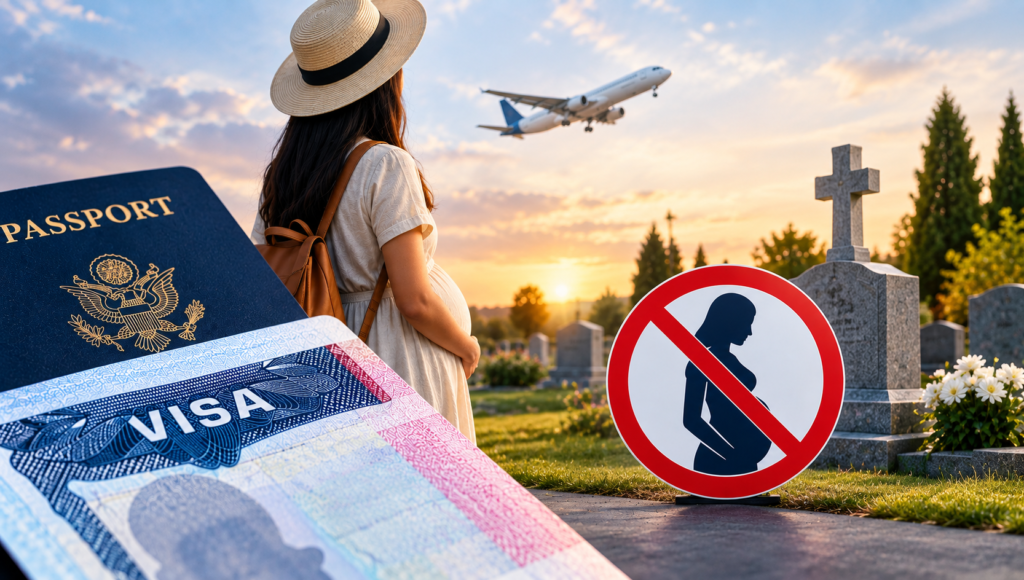
On September 23, 2026, U.S. Secretary of State Marco Rubio announced a new visa-restriction policy targeting individuals who knowingly engage in, have engaged in, or facilitate what the Department of State (DOS) describes as “birth tourism.”
“Birth tourism” generally refers to travel to the United States for the primary purpose of giving birth so that a child may obtain U.S. citizenship based on birth in the United States. The Department of State has separately stated that birth tourism is not a permissible purpose for issuance of a visitor visa.
Who May Be Targeted?
According to Secretary Rubio’s announcement, the new policy is intended to address individuals and organizations that knowingly participate in or facilitate commercial birth-tourism activities.
The announcement identifies several categories that may fall within the policy, including:
- Owners, operators, and managers of alleged commercial birth-tourism facilitation networks;
- Individuals described as visa “fixers” who coach applicants to commit fraud or misrepresent information during the visa process;
- Foreign medical providers who knowingly assist or facilitate travel to the United States for birth tourism;
- Individuals or entities involved in the fraudulent use of Medicaid in connection with birth tourism; and
- Other individuals who knowingly support, assist, or enable commercial birth-tourism operations.
The September 23 announcement, however, does not provide detailed definitions of terms such as “commercial birth tourism facilitation networks” or “visa fixers.” It also does not fully explain the procedures that consular officers will use to identify individuals subject to the restrictions.
Legal Authority for the New Visa Restrictions
Secretary Rubio stated that the policy is being implemented under Section 212(a)(3)(C) of the Immigration and Nationality Act (INA).
This provision concerns foreign-policy-related inadmissibility and applies where the Secretary of State has reasonable grounds to believe that an individual’s entry or proposed activities in the United States could have potentially serious adverse foreign-policy consequences.
Because the September 23 announcement provides limited implementation guidance, additional Department of State instructions may be important in determining how broadly this provision will be applied in individual visa cases.
What Does This Mean for Visa Applicants?
The new policy is primarily directed at people who facilitate or knowingly participate in birth-tourism activities. It does not state that every person who has traveled to the United States while pregnant will automatically be subject to a visa restriction.
The circumstances surrounding a visa application remain important. Applicants must provide truthful information about the purpose of their proposed travel and demonstrate eligibility for the visa category they are seeking. The Department of State already states that traveling to the United States primarily to give birth for the purpose of obtaining U.S. citizenship is not an acceptable basis for a visitor visa.
Applicants and other individuals involved in U.S. immigration or visa matters should therefore pay particular attention to accurate representations regarding travel purpose, financial arrangements, medical treatment, and other relevant circumstances.
Birth Tourism Prevention Task Force
The latest announcement follows an earlier Department of State initiative announced on August 12, 2026: the establishment of a “Birth Tourism Prevention Task Force.”
According to DOS, the task force was created to review the activities of visa holders and work to dismantle alleged illegal birth-tourism networks. The Department stated that the task force had contributed to the revocation of more than 600 visas within one month.
These figures and enforcement statements are claims made by the Department of State and should be understood in that context.
Key Questions Remain About Implementation
Although the September 23 announcement establishes the policy direction, several practical questions remain.
The announcement does not fully explain:
- How DOS will define a “commercial birth tourism facilitation network”;
- What specific conduct will cause an individual to be considered a facilitator;
- How the Department will identify alleged visa “fixers”;
- What evidence will be considered when determining whether an individual knowingly facilitated birth tourism;
- How foreign medical providers may be affected; or
- What procedures will apply to individuals whose visas are restricted under the policy.
These details may become clearer through subsequent DOS guidance, consular instructions, or individual visa decisions.
What Should Individuals and Professionals Consider?
Individuals applying for U.S. visas should ensure that all information provided during the application and interview process is accurate and complete. Misrepresentations regarding the purpose of travel can have serious immigration consequences.
Professionals who may encounter birth-tourism-related cases—including medical providers, immigration professionals, travel-related businesses, and other service providers—should also be aware of the evolving policy and avoid knowingly participating in fraudulent or unlawful activity.
Because the September 2026 policy is new and implementation details remain limited, individuals with specific concerns about a visa application or potential inadmissibility issue should consider obtaining advice from a qualified U.S. immigration attorney.
Conclusion
The Department of State’s September 23, 2026 announcement represents a new visa-enforcement measure directed at individuals whom the government believes knowingly participate in or facilitate birth tourism.
While the policy identifies several categories of potential targets, important questions remain regarding its definitions, evidentiary standards, and practical implementation. Further guidance from the Department of State may provide greater clarity on how the restrictions will affect individuals, medical providers, and organizations connected to alleged birth-tourism activities.
As the policy develops, applicants and professionals should rely on current official Department of State guidance and case-specific legal advice rather than assumptions about how the new restrictions will be applied.



 Immigration Fleet Law Firm