
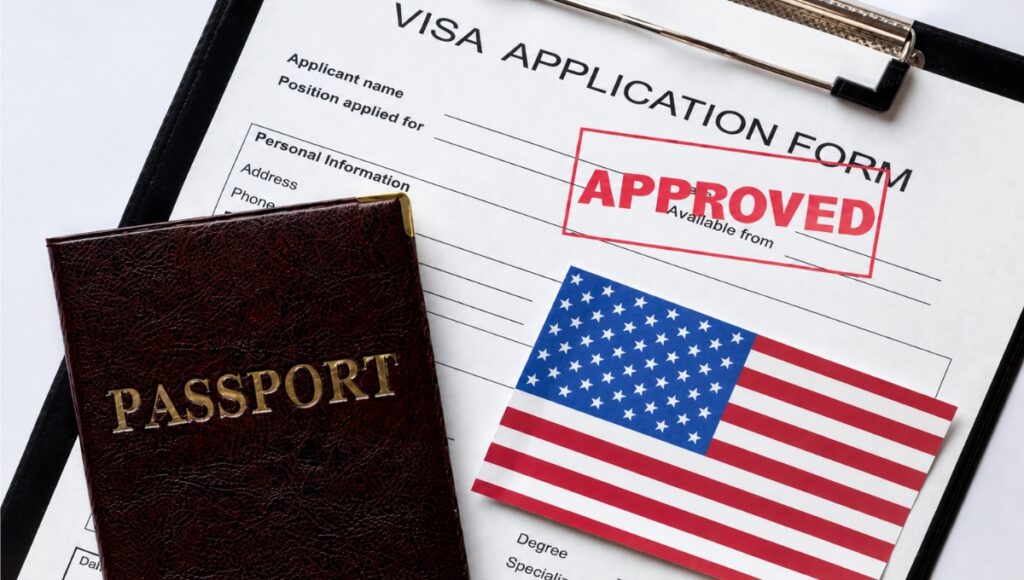
If you or someone you love is planning to visit the United States on a tourist or business visa, there is a major policy change you need to know about. The U.S. Department of State (DOS) has made its Visa Bond Program permanent, effective August 3, 2026. Under this rule, certain applicants for B-1 (business) and B-2 (tourist) visas from 50 designated countries may be required to post a financial bond of up to $20,000 before their visa is issued. This is not a fee — it is a refundable deposit that guarantees you will follow all the terms of your visa and leave the United States on time.
This rule directly affects millions of families and individuals who travel to the U.S. for tourism, to visit relatives, or for short business trips. If your home country is on the affected list, understanding exactly how this works — and what you must do to get your bond money back — could save you thousands of dollars and prevent serious immigration consequences.
Whether you are planning your first trip to the United States or are a regular visitor, this guide breaks down everything you need to know in plain language about the new visa bond requirement and how it affects your USA immigration journey.
What Is the B-1/B-2 Visa Bond Program?
The Visa Bond Program was first introduced as a pilot in August 2025 under Executive Order 14159. After one year of operation, the Department of State reviewed the results and decided to make the program a permanent part of U.S. immigration policy. The final rule was published in the Federal Register on August 3, 2026 (91 FR 48757) and is now in effect.
The program gives consular officers — the U.S. government officials who review visa applications at embassies and consulates abroad — the authority to require a financial bond from certain B-1/B-2 visa applicants. This authority comes from Section 221(g)(3) of the Immigration and Nationality Act, which has long permitted visa bonds but was rarely used until now.
The bond is designed to serve as a financial guarantee that you will:
- Comply with all the terms of your visa
- Not work without authorization in the United States
- Depart the United States on or before your authorized period of stay expires
- Not file for asylum or other humanitarian protection during your visit
If you comply with all these requirements and depart correctly, the full bond amount is returned to you — with no interest. If you violate any of these conditions, the entire bond is forfeited.
How Much Is the Bond, and Who Decides?
The bond amount is not a fixed fee for every applicant. Instead, the consular officer at the U.S. embassy or consulate will decide the amount based on your individual circumstances. There are three possible bond levels:
- $10,000 — the minimum level
- $15,000 — the standard amount for most applicants
- $20,000 — the maximum, for higher-risk cases
According to the Department of State, $15,000 will be the default amount unless factors in your case justify a lower or higher bond. When making this determination, the officer may consider your purpose of travel, your employment history and income, your financial resources, your education and skills, and your family and personal ties both to the United States and to your home country.
Starting October 1, 2027, the $20,000 maximum will be subject to periodic inflation adjustments. There is no formal application process to request a bond waiver, though the Assistant Secretary for Consular Affairs may grant waivers in exceptional humanitarian or national interest circumstances.
Which Countries Are Affected?
Currently, the program applies to nationals of approximately 50 countries, many of which are in Africa. The Department of State determined these countries for specific reasons related to their visa overstay rates, identity document security, criminal record systems, and information-sharing practices with the United States.
Importantly, the list of affected countries can change. The Department of State may add or remove countries on a rolling basis, but new additions must be announced at least 15 days before the requirement takes effect for that country’s nationals. Countries that participate in the Visa Waiver Program (VWP) — such as the United Kingdom, Germany, Japan, and South Korea — are generally excluded from the bond requirement.
To find the current list of affected countries, check the U.S. Department of State’s official travel website at travel.state.gov. If you are planning to apply for a B-1 or B-2 visa, always verify whether your country is on the list before your consular appointment.
What Happens to Your Bond Money — and When Can You Lose It?
Your bond will be returned to you in full if you meet all of the following conditions:
- You maintain lawful immigration status throughout your stay
- You do not engage in unauthorized employment
- You depart the United States on or before the date printed on your Form I-94 (the arrival/departure record)
- You exit through an authorized commercial airport
No interest is paid on the returned bond. The funds are generally refunded through the Treasury-managed payment system to the person who originally paid the bond.
However, your bond can be forfeited in full — meaning you will not get the money back — if any of the following occur:
- You remain in the United States past your authorized period of stay (overstay)
- You file a late extension or change-of-status request
- You fail to leave after an extension or change-of-status request is denied
- You violate the conditions of your visa in any way
- You file an asylum application (Form I-589) or any other request for humanitarian protection while in the United States
That last point is especially important. Filing for asylum — even if you have a genuine fear of returning to your home country — will result in the forfeiture of your entire bond. This is one of the most significant and controversial aspects of the new program, as it creates a financial barrier against seeking humanitarian relief.
Practical Steps: What You Should Do Before Your Visa Appointment
If you are from one of the 50 designated countries and plan to apply for a B-1 or B-2 visa, here is what you should do to prepare:
- Check the current country list. Visit travel.state.gov to confirm your country is on the affected list before your consular appointment. The list can change.
- Prepare for the bond financially. Be ready to have $15,000 (or up to $20,000) available before your visa is issued. This money must be accessible, as you cannot receive your visa until the bond is paid.
- Plan your departure carefully. Know your authorized period of stay and make sure you depart the United States before that date. Overstaying — even by one day — can trigger bond forfeiture and serious immigration consequences, including bars on future entry.
- Do not file for immigration benefits without consulting an attorney. If your situation changes while you are in the United States, talk to a qualified immigration attorney before filing any applications, including extension or change-of-status requests.
- Keep all travel records. Save your boarding passes, passport stamps, and Form I-94 records as proof that you departed the United States lawfully and on time.
The pilot program data from 2025 showed a dramatic effect: visa issuance to nationals from the 50 affected countries dropped by approximately 83%, and overstays from those countries fell from more than 45,000 in FY 2024 to fewer than 50 during the first ten months of the pilot. The Department of State cited these numbers as evidence the program is working — but immigration advocates argue the reduction in visa issuance shows that the bond requirement effectively prices out low- and middle-income applicants from ever being able to visit the United States.
What This Means for You
The permanent Visa Bond Program is one of the most significant changes to the U.S. visitor visa process in decades. If you are from an affected country, you are now required to make a substantial financial commitment — potentially $20,000 — just to receive a tourist or business visa. While the money is refundable if you follow all the rules, the upfront requirement is a major barrier for many families and individuals.
This rule does not affect student visas, immigrant visas, or other nonimmigrant visa categories at this time, though the underlying law does permit the bond requirement to be extended to other visa types in the future.
If you have questions about whether this rule applies to you, or if you are concerned about how to protect your bond money during your visit to the United States, the best step you can take is to consult with a licensed immigration attorney before your consular appointment.
For the full text of the final rule and additional legal guidance, visit the American Immigration Lawyers Association (AILA) at aila.org or consult a qualified immigration attorney. AILA is the national organization of immigration lawyers and is one of the most trusted sources of accurate, up-to-date information on U.S. immigration law and policy.


 Immigration Fleet Law Firm