
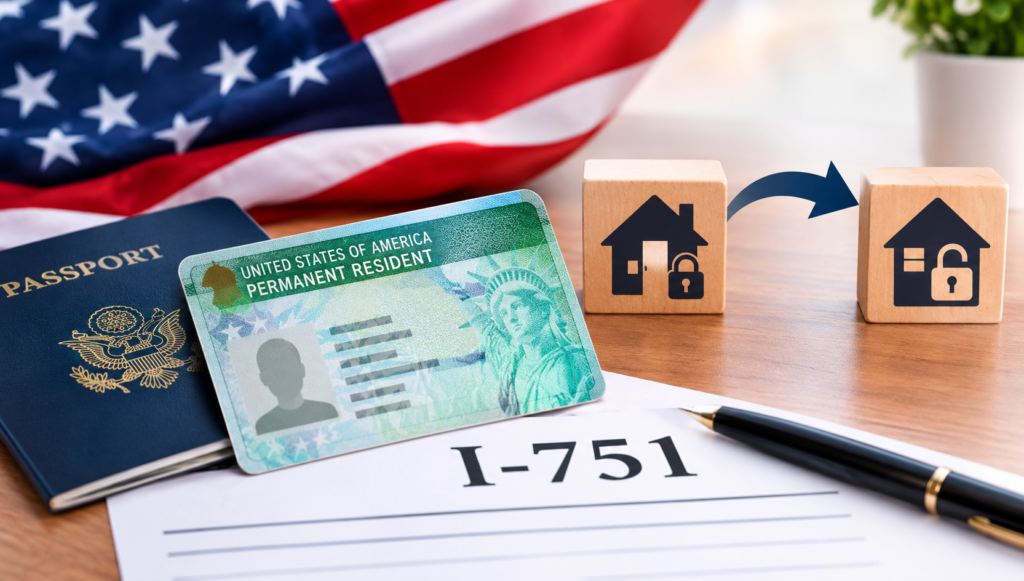
Receiving a marriage-based green card is a major milestone. But if your marriage was less than two years old when you became a permanent resident, your green card comes with a catch: it is valid for only two years. To keep your status, you must remove conditions on your green card by filing Form I-751. Missing this step can put your residence at risk, so here is what you need to know. Conditions on Green Card (I-751)
What Is a Conditional Green Card?
A conditional green card is a two-year permanent residence card given to immigrants who qualify through marriage to a U.S. citizen or permanent resident when the marriage is less than two years old on the day residence is granted. It gives you the same basic rights as other permanent residents, including living and working in the United States.
The “conditional” label exists so USCIS can confirm your marriage was entered in good faith and not only to obtain immigration benefits. Investors who receive residence through the EB-5 program also get conditional status, but they file a different form (I-829). This article focuses on marriage-based cases.
What Is Form I-751?
Form I-751, Petition to Remove Conditions on Residence, is the application that asks USCIS to lift the conditions and issue a permanent ten-year green card. It is the key step between conditional status and full permanent residence.
When Should You File Form I-751?
Timing is the most important part of this process. In general:
- File within the 90-day window before your conditional green card expires (the two-year anniversary of becoming a conditional resident).
- Do not file earlier than 90 days before expiration, because USCIS may reject the petition as premature.
- Check the expiration date printed on your card and mark your calendar well in advance.
If you miss the deadline, USCIS may still accept a late petition, but only if you can show good cause and extenuating circumstances. A late filing can lead to loss of status and even removal proceedings, so do not wait.
Who Files the Petition?
Most couples file jointly, meaning both spouses sign the petition together. Children who received conditional residence at the same time as the parent can usually be included in the parent’s petition, or they can file separately.
Can You File Without Your Spouse?
Yes, in certain situations you may request a waiver of the joint filing requirement. You may qualify if:
- You entered the marriage in good faith, but it ended in divorce or annulment.
- Your spouse has died.
- You or your child experienced battery or extreme cruelty from your spouse.
- Removal from the U.S. would cause you extreme hardship.
Waiver cases need more detailed evidence, and this is where an experienced immigration attorney is especially valuable.
What Evidence Should You Include?
USCIS wants proof that your marriage is real and ongoing. Strong evidence usually covers a mix of the following:
- Joint lease, mortgage or property ownership
- Joint bank accounts, credit cards and tax returns
- Insurance policies listing both spouses
- Utility bills and mail showing the same address
- Photos together over time, travel records and communication
- Birth certificates of any children
- Sworn statements from friends and family who know the couple
The more evidence from different areas of your shared life, the stronger your petition.
What Happens After You File?
Once USCIS receives your I-751, you will get a receipt notice (Form I-797). This notice can serve as temporary proof of your lawful status while the case is pending, and USCIS has extended its validity for a set period, so check your notice for the exact dates. Next steps usually include:
- Biometrics appointment for fingerprints and photographs.
- Possible Request for Evidence (RFE) if documents are missing or unclear.
- Possible interview if USCIS needs more proof of the marriage.
- Decision, which brings either approval and a ten-year green card or a denial.
Common Mistakes to Avoid
- Filing too early or too late
- Forgetting to sign the form or include the filing fee
- Submitting little or weak evidence of a shared life
- Not updating USCIS when you move
- Ignoring an RFE or interview notice
- Using an outdated form edition
Always check the current form edition and fee on the USCIS website before filing.
How Immigration Fleet Can Help
Removing conditions looks simple on paper, but small errors can lead to delays, RFEs or even denial. At Immigration Fleet, our attorneys help clients across Flower Mound, Dallas and Texas prepare strong I-751 petitions, organize evidence, respond to RFEs and handle waiver cases.
If your conditional green card is close to expiring, or you are unsure whether you qualify to file, speak with our team today at 1800-311-3430 or book a consultation at immigrationfleet.com.




 Immigration Fleet Law Firm