
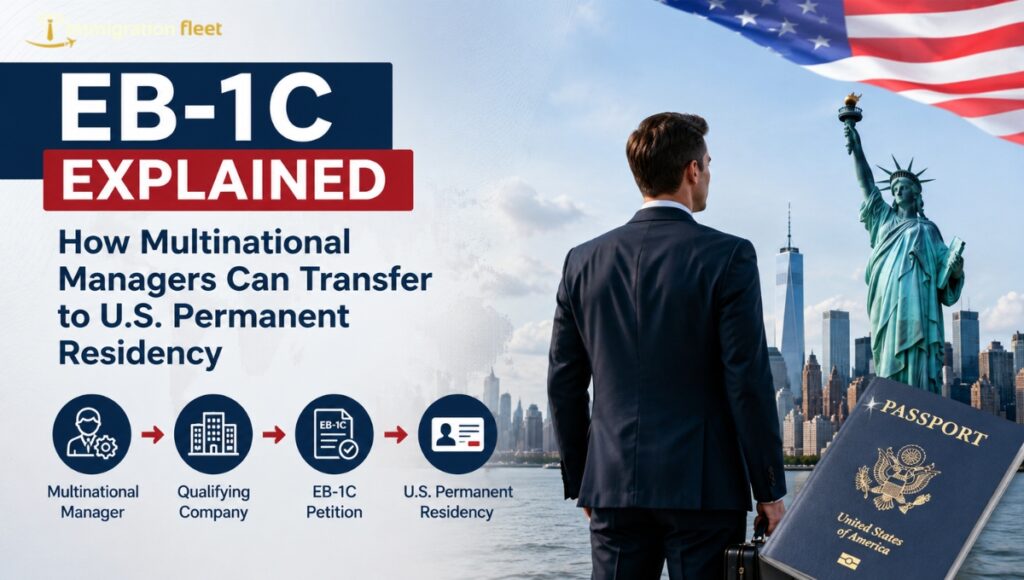
For international executives leading global teams, relocating to the United States permanently doesn’t have to mean starting over. The EB-1C visa offers a direct pathway to a Green Card for managers and executives of qualifying multinational companies — without the wait times associated with many other employment-based categories.
What Is the EB-1C Visa?
The EB-1C is an employment-based, first-preference immigrant visa category designed specifically for multinational managers and executives. It allows a foreign company with a qualifying U.S. affiliate, subsidiary, or parent company to transfer senior leadership directly into permanent residency, bypassing the labor certification process required by many other work visas.
Who Qualifies for EB-1C?
To be eligible, the applicant generally must have worked in a managerial or executive capacity for at least one continuous year within the past three years at a qualifying overseas entity. The U.S. company must also demonstrate an active, ongoing business relationship with the foreign entity — whether through ownership, franchising, or corporate expansion.
Why EB-1C Appeals to Growing Multinational Companies
As companies expand into the U.S. market, EB-1C provides a structured way to bring proven leadership on board quickly. Unlike visas that require extensive labor market testing, this category focuses on the applicant’s role and the company’s international structure — making it a strategic tool for businesses scaling operations across borders.
Key Documentation for a Strong EB-1C Petition
A successful petition typically requires clear evidence of:
- The qualifying relationship between the foreign and U.S. entities
- The applicant’s managerial or executive job duties abroad
- The U.S. company’s capacity to support a similar managerial role
- Organizational charts showing reporting structure and scope of authority
Planning Your Transfer with Legal Guidance
Because EB-1C petitions are evaluated heavily on documentation and company structure, working with experienced immigration counsel can make the difference between approval and delay. A well-prepared petition anticipates USCIS scrutiny around company relationships and role legitimacy from the outset.




 Immigration Fleet Law Firm