
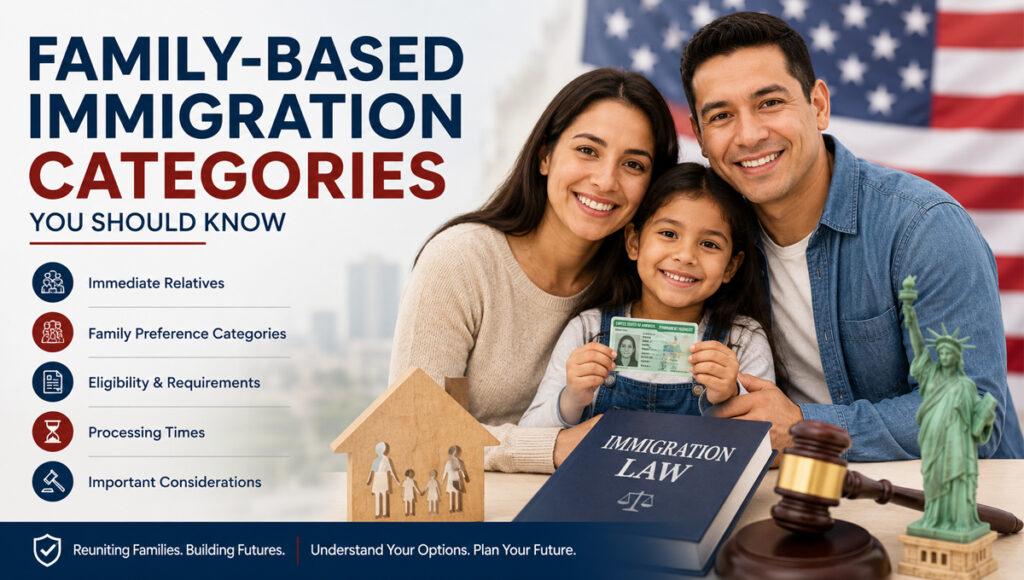
Family-based immigration is one of the most common pathways to obtaining lawful permanent residence in the United States. The U.S. immigration system allows citizens and lawful permanent residents to sponsor certain family members for green cards. Understanding the different family-based immigration categories can help families navigate the immigration process more effectively and reunite with loved ones.
Immediate Relative Categories
Immediate relatives of U.S. citizens receive special immigration benefits because there are no annual visa limits for these categories. This often results in faster processing times.
The immediate relative categories include:
- Spouses of U.S. Citizens – Foreign-born spouses may qualify for permanent residency through marriage to a U.S. citizen.
- Unmarried Children Under 21 – Minor children of U.S. citizens are eligible for immediate relative status.
- Parents of U.S. Citizens – U.S. citizens who are at least 21 years old can sponsor their parents for green cards.
These categories generally provide the quickest route to family-based permanent residence.
Family Preference Categories
Unlike immediate relatives, family preference categories are subject to annual visa limits. As a result, applicants may experience longer waiting periods depending on visa availability.
The main family preference categories include:
F1 – Unmarried Adult Sons and Daughters of U.S. Citizens
This category applies to unmarried children aged 21 or older of U.S. citizens.
F2A – Spouses and Children of Permanent Residents
Lawful permanent residents can sponsor their spouses and unmarried children under 21.
F2B – Unmarried Adult Sons and Daughters of Permanent Residents
This category covers unmarried children aged 21 or older of green card holders.
F3 – Married Sons and Daughters of U.S. Citizens
Married adult children of U.S. citizens may qualify under this category regardless of age.
F4 – Brothers and Sisters of U.S. Citizens
U.S. citizens who are at least 21 years old can sponsor their siblings. Due to high demand, wait times are often longer in this category.
Choosing the Right Immigration Path
Selecting the correct family-based immigration category is essential for a successful application. Factors such as relationship type, age, marital status, and the sponsor’s immigration status determine eligibility and processing times.
Working with an experienced immigration attorney can help ensure proper documentation, avoid delays, and maximize the chances of approval.
Conclusion
Family-based immigration remains a cornerstone of U.S. immigration law, helping families reunite and build their futures together. Whether sponsoring a spouse, child, parent, or sibling, understanding the available categories is the first step toward achieving your immigration goals. Proper planning and legal guidance can make the process smoother and more efficient for everyone involved.




 Immigration Fleet Law Firm