
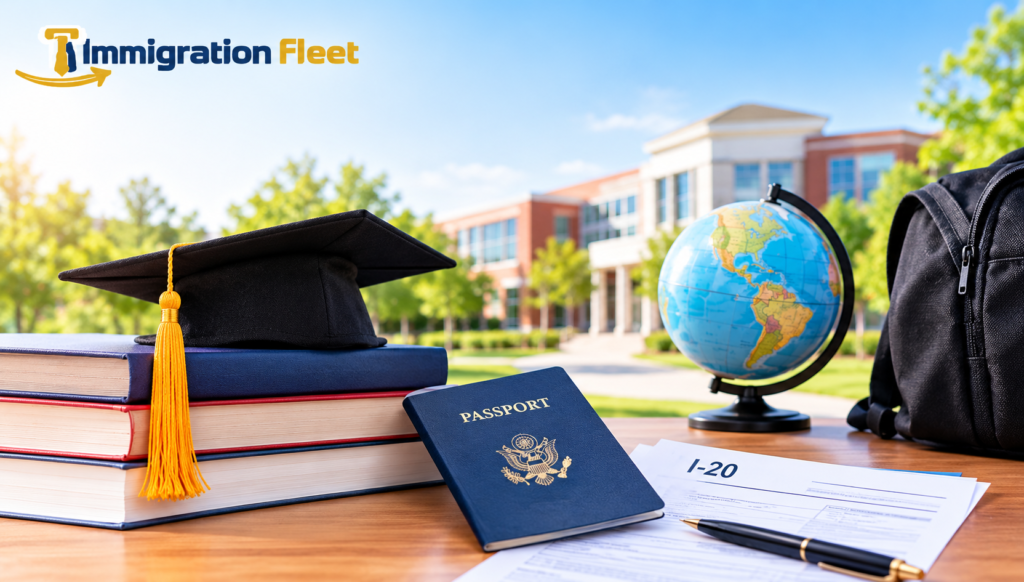
The M-1 vocational student visa is a nonimmigrant visa for international students who want to pursue vocational or nonacademic education in the United States. Unlike the F-1 visa, which is generally designed for academic studies, the M-1 visa is intended for students attending approved vocational schools, technical programs, and other recognized nonacademic institutions.
Understanding M-1 visa eligibility, application requirements, and practical training rules can help prospective students plan their education and immigration status more effectively.
What Is an M-1 Student Visa?
The M-1 visa allows eligible international students to enter the United States temporarily to participate in a full-time vocational or nonacademic program. Examples may include technical training, mechanical programs, culinary programs, cosmetology, aviation-related training, and other career-focused educational programs.
Students generally need to attend a school authorized to enroll international students and maintain the required immigration status throughout their program.
M-1 Visa Eligibility Requirements
To qualify for an M-1 vocational student visa, applicants generally must meet several requirements. These include:
- Acceptance into an approved vocational or nonacademic educational institution.
- Enrollment in a full-time course of study.
- A valid Form I-20 issued by the educational institution.
- Sufficient financial resources to cover tuition, living expenses, and other costs.
- A genuine intention to maintain temporary student status in the United States.
- A foreign residence that the applicant intends to maintain, subject to applicable immigration requirements.
- Ability to demonstrate that the proposed program and travel purpose are consistent with M-1 status.
Applicants must also satisfy applicable visa application and consular requirements.
M-1 Visa Application Process
The M-1 visa application process generally begins after the student is accepted by an eligible vocational school. The institution issues Form I-20 after the student meets its enrollment and financial requirements.
The applicant then typically pays the required SEVIS I-901 fee, completes the DS-160 online visa application, and schedules a visa interview when required.
During the visa process, applicants may be asked about their educational plans, financial resources, previous education, career goals, and intention to return abroad after completing their authorized stay.
Because visa requirements and procedures can vary based on individual circumstances, applicants should carefully review the current requirements before applying.
Maintaining M-1 Student Status
Maintaining lawful M-1 status is important throughout the vocational program. Students are generally expected to follow the terms of their program, maintain the required course load, and comply with applicable school and immigration rules.
Changes to the program, school, or other significant circumstances may require coordination with the school’s designated officials and compliance with applicable immigration procedures.
Failure to maintain status can create serious immigration consequences and may affect future benefits or applications.
M-1 Practical Training
M-1 students may be eligible for practical training after completing their vocational program. Practical training is intended to provide experience directly related to the student’s course of study.
Unlike certain employment benefits available to F-1 students, M-1 practical training is subject to specific restrictions and authorization requirements. Students should obtain the appropriate authorization before beginning employment.
The timing and duration of practical training depend on the applicable immigration rules and the student’s individual circumstances. Planning ahead is important because unauthorized employment can result in immigration problems.
M-1 Visa vs. F-1 Visa
The primary difference between the M-1 and F-1 classifications is the type of education pursued. The F-1 visa is generally used for academic education, while the M-1 visa is designed for vocational or other recognized nonacademic programs.
Students should select the classification that accurately reflects their educational program and intended activities in the United States.
Conclusion
The M-1 vocational student visa provides an immigration pathway for international students seeking career-focused vocational or technical education in the United States. From obtaining admission and Form I-20 to maintaining status and obtaining practical training authorization, each stage requires careful attention to immigration requirements.
Prospective students should understand their responsibilities before entering the United States and seek qualified immigration guidance when their circumstances involve complex status, employment, or future immigration issues.




 Immigration Fleet Law Firm