
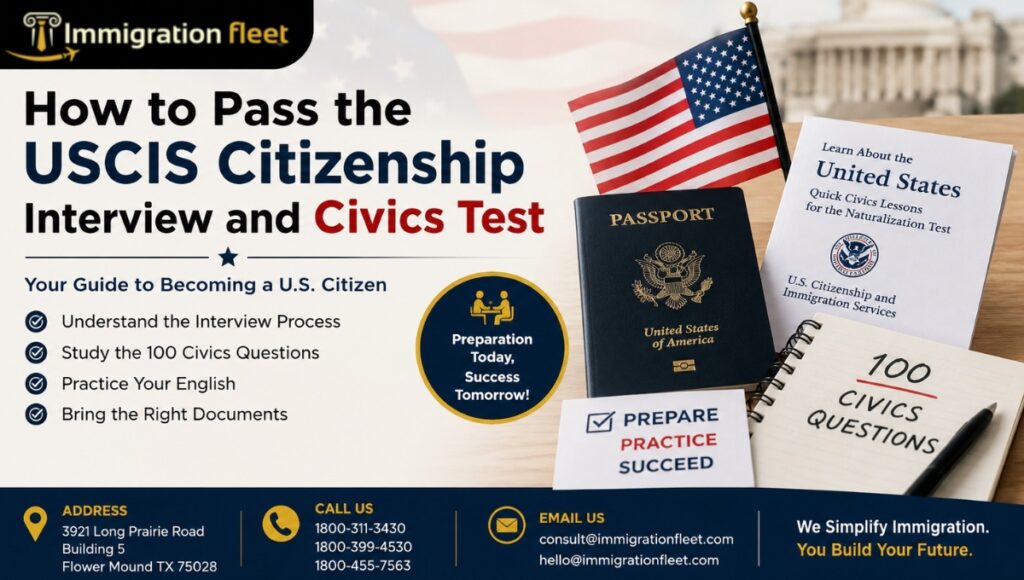
Preparing for your USCIS citizenship interview? Learn exactly what happens during the interview, how the civics test works, and the best ways to prepare so you can pass with confidence.
Becoming a U.S. citizen is one of the most exciting milestones in the naturalization journey — but it’s completely normal to feel nervous about the USCIS citizenship interview and civics test. The good news? With the right preparation, most applicants pass on their first attempt.
This guide walks you through exactly what to expect at your interview, how the civics test is scored, and the most effective ways to prepare — so you can walk in feeling calm and confident.
What Happens During the USCIS Citizenship Interview?
Once you’ve filed Form N-400 (Application for Naturalization), USCIS will schedule an in-person interview at your local field office. During this appointment, a USCIS officer will:
- Review your N-400 application for accuracy
- Verify your identity using your documents
- Ask questions about your background and eligibility
- Test your English language ability
- Administer the civics test
Documents to Bring to Your Interview
Come prepared with the following:
- Your green card
- Valid passport(s)
- State-issued photo ID
- Your interview appointment notice
- Tax documents, if applicable
- Marriage or divorce records, if relevant
- Any additional documents specifically requested by USCIS
Pro tip: Arrive at least 30 minutes early, dress neatly, and bring originals (not just copies) of every document on your notice.
How the USCIS Civics Test Works
The civics test draws from a bank of 100 official USCIS questions covering U.S. history and government. During your interview:
- The officer will ask you up to 10 questions from this list
- You must answer at least 6 correctly to pass
- Testing stops as soon as you reach 6 correct answers
Common Civics Test Topics
- Branches of government
- Constitutional rights and amendments
- U.S. presidents and their history
- Senators and representatives
- National holidays
- Key historical events
USCIS publishes the complete list of official study questions on its website — and importantly, you only need to study those questions. There’s no need to memorize outside trivia or unofficial study guides. Immigration attorney for naturalization
The Best Ways to Prepare for Your Interview
1. Study the Official USCIS Questions
Memorize all 100 civics questions and their correct answers. Flashcards, mobile apps, and daily practice quizzes are the most effective tools — consistency matters more than cramming.
2. Practice Speaking English
Your officer will assess your ability to understand and respond to questions in English. Practice answering common conversational questions such as:
- Where do you live?
- What is your job?
- Have you traveled outside the U.S.?
- Are you willing to take the Oath of Allegiance?
3. Review Your N-400 Application Thoroughly
A large portion of interview questions come directly from the information you submitted on your N-400. Re-read your entire application before the interview so your spoken answers match exactly what you wrote.
Common Mistakes That Trip Up Applicants
Avoid these frequent pitfalls:
- Giving answers that contradict your N-400 form
- Forgetting or misstating past travel dates
- Not bringing required documents
- Speaking too quickly or guessing when unsure
- Studying from unofficial sources instead of USCIS materials
If you don’t understand a question during the interview, it’s completely acceptable to politely ask the officer to repeat or clarify it.
Final Tips for Interview Success
- Start preparing several weeks in advance
- Practice a little bit every day rather than cramming
- Stay calm and take your time answering
- Rely only on official USCIS study materials
Most applicants who thoroughly study the official civics questions and review their N-400 application pass their interview and civics test successfully.
When to Consult an Immigration Attorney
If your situation includes any of the following, consider speaking with an experienced immigration attorney before your interview:
- A complicated immigration history
- A criminal record
- Extended trips outside the United States
- Any concerns about your eligibility for naturalization
An attorney can help identify potential red flags in advance and guide you toward a smoother naturalization process.




 Immigration Fleet Law Firm