h1-b

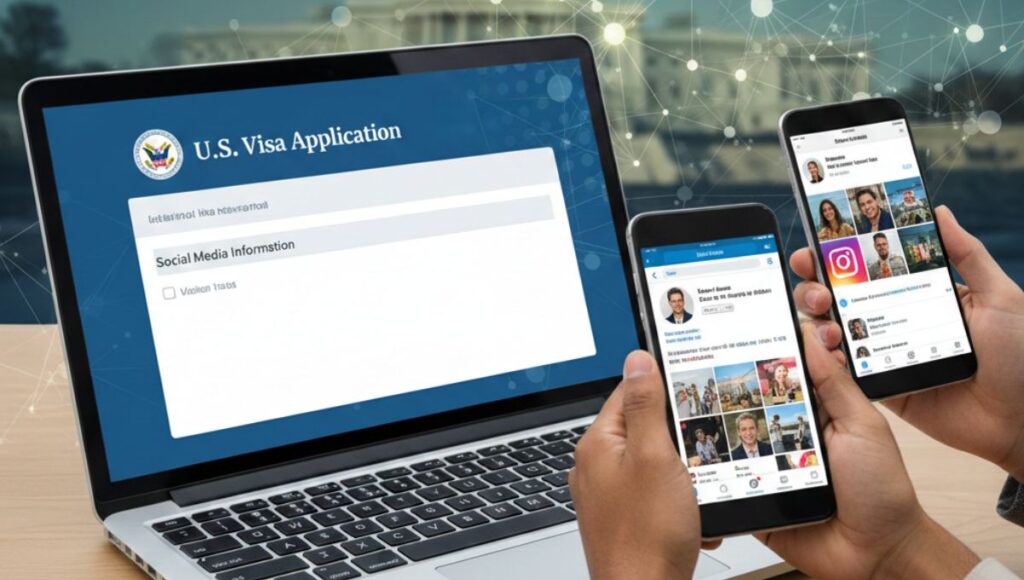
U.S. Visa Social Media Vetting

Expanded Social-Media Vetting for H-1B and H-4 Visa Applicants: Key Compliance Guidance for Employers and Foreign Nationals

U.S. immigration vetting continues to evolve as federal agencies strengthen national-security and identity-verification measures. One significant development is the expanded requirement for social-media disclosure during the non-immigrant visa application process. This requirement now applies broadly to H-1B specialty occupation workers and their H-4 dependent family members, similar to longstanding practices in student-visa categories such as […]

Expanded Social-Media Vetting for H-1B and H-4 Visa Applicants: Key Compliance Guidance for Employers and Foreign Nationals Read More »

U.S. Visa Interview Delays 2026

Postponement of U.S. Consular Visa Interviews into 2026–2027: Legal and Practical Analysis

Introduction Beginning in December 2025, U.S. consular posts—particularly in high-volume jurisdictions such as India—have initiated widespread rescheduling of non-immigrant visa interview appointments into 2026 and, in some cases, 2027. These postponements affect applicants across multiple employment-based non-immigrant categories, including H-1B, H-4, L-1, L-2, and related classifications. Importantly, these extended delays did not persist uniformly over

Postponement of U.S. Consular Visa Interviews into 2026–2027: Legal and Practical Analysis Read More »

H-1B Weighted Selection Process

Weighted Selection Process for Cap-Subject H-1B Petitions (DHS Final Rule)

Agency: Department of Homeland Security (DHS), U.S. Citizenship and Immigration Services (USCIS)Document Number: 2025-23853Type: Final rule implementing a revised H-1B cap selection processScheduled Publication Date: December 29, 2025Pages: Approximately 303 Purpose and Overview of the Change The Department of Homeland Security, through USCIS, has issued a final rule revising the H-1B cap lottery selection process.

Weighted Selection Process for Cap-Subject H-1B Petitions (DHS Final Rule) Read More »

H-1B Employee Termination

Termination of H-1B Employees: Legal Standards, Regulatory Obligations, Employer Liability, and Beneficiary Rights

Introduction Termination of an H-1B employee is not a routine HR event. Unlike normal at-will employment, where an employer may terminate a worker for any lawful reason, the H-1B category imposes strict federal immigration obligations on the employer. These rules arise from the Immigration and Nationality Act (INA), the regulations of the United States Citizenship

Termination of H-1B Employees: Legal Standards, Regulatory Obligations, Employer Liability, and Beneficiary Rights Read More »

H-1B Prudential Visa Revocation

H-1B and Prudential Visa Revocation: Legal Consequences, Risks, and Essential Guidance for Non-immigrant Workers

Introduction Prudential visa revocation has become increasingly common in recent years, particularly for individuals in professional non-immigrant statuses such as H-1B, L-1, O-1, and F-1. A prudential revocation occurs when the U.S. Department of State (DOS) revokes a visa while the visa holder is physically present in the United States. The rationale is “precautionary”: DOS

H-1B and Prudential Visa Revocation: Legal Consequences, Risks, and Essential Guidance for Non-immigrant Workers Read More »

EB-5 Green Card

Understanding the EB-5 Immigrant Investor Program: A Comprehensive Legal Overview

The EB-5 Immigrant Investor Program, administered by U.S. Citizenship and Immigration Services (USCIS), provides a pathway to lawful permanent residence (Green Card) for qualified foreign investors who make a substantial investment in the United States and contribute to job creation. Established by Congress in 1990, the program has undergone significant modernization through the EB-5 Reform

Understanding the EB-5 Immigrant Investor Program: A Comprehensive Legal Overview Read More »

H-1B Supplemental Fee

Exemptions, Compliance & Enforcement Challenges Under the New H-1B Supplemental Fee Framework

Introduction The recent presidential proclamation imposing a substantial supplemental fee on new H-1B petitions has introduced a complex layer of regulatory obligations for U.S. employers. While the stated objective is to safeguard U.S. labor interests, the reality is that employers—especially those hiring foreign nationals from abroad—now face a strict compliance environment marked by interpretive ambiguity,

Exemptions, Compliance & Enforcement Challenges Under the New H-1B Supplemental Fee Framework Read More »

The 2025 Immigration Law

The 2025 Immigration Law: What Congress Passed and What It Means for Immigration Reform, Border Security, Visa Backlogs, and Non-Citizen Residents

Overview — What Became Law In mid-2025, the U.S. Congress approved a sweeping budget and policy package—enacted as H.R. 1, dubbed by many the “One Big Beautiful Bill”—which includes a broad array of immigration-related provisions. These span enforcement funding, detention capacity, user-fees, parole rules, adjudication processes and other administrative authorities. The bill passed both houses

The 2025 Immigration Law: What Congress Passed and What It Means for Immigration Reform, Border Security, Visa Backlogs, and Non-Citizen Residents Read More »

H-1B and H-4 visa holders

U.S. Supreme Court Declines to Review Rule Allowing H-1B Spouses to Work

In a pivotal decision on October 14, 2025, the U.S. Supreme Court declined to review a challenge to a 2015 Department of Homeland Security (DHS) rule permitting certain spouses of H-1B visa holders to work in the United States. This decision effectively upholds a 2019 ruling by the U.S. Court of Appeals for the District

U.S. Supreme Court Declines to Review Rule Allowing H-1B Spouses to Work Read More »

H-1B immigration process

H-1B Reform 2025: What Employers Need to Know About the Presidential Proclamation

Introduction On September 19, 2025, the President of the United States issued a Presidential Proclamation titled “Restriction on Entry of Certain Non-immigrant Workers.” Acting under the authority of Sections 212(f) and 215(a) of the Immigration and Nationality Act (INA), the order introduces sweeping changes to how H-1B non-immigrant workers may enter the United States. This

H-1B Reform 2025: What Employers Need to Know About the Presidential Proclamation Read More »

Stay informed on US Immigration.

Subscribe today to receive important updates, expert advice, and opportunities for your US journey.

We don’t spam! Read our privacy policy for more info.